

Styling Vintage Inspired Home Decor: A Modern Guide
Sep 29th 2026
Table of Contents
- Start With a Clear Vision for Your Vintage Inspired Aesthetic
- How to Mix Vintage and Modern Decor Without Clutter
- Best Vintage Style Home Decor Brands and Where to Source
- Styling Vintage Accessories: Focal Points and Vignettes
- Incorporating Vintage Art, Frames, and Wall Decor
- Vintage Textiles and Rugs: Foundation for Your Look
- Small-Space Vintage Styling and Sustainable Restoration
- Frequently Asked Questions
Last Updated: September 25, 2026
Start With a Clear Vision for Your Vintage Inspired Aesthetic
Before you buy a single piece, know what you're building toward. Vintage inspired home decor works best when it reflects a deliberate choice, not random finds that happen to be old. The difference between a curated home and a cluttered one comes down to having a clear vision first.
Consider which era appeals to you: mid-century modern, art deco, rustic farmhouse, or coastal vintage. Your aesthetic should feel like a natural extension of how you live now, not a museum exhibit. thomaspaul's handmade textiles and designer decor pieces are built with modern living in mind, so vintage elements integrate seamlessly into contemporary spaces.
Gather inspiration by creating a mood board with colors, patterns, and pieces that excite you. Look for recurring themes: warm wood tones and brass accents, cool blues and linens, or bold geometric patterns? Your vision should answer: What feeling do I want my home to evoke?
Once you have that clarity, everything else becomes easier. You'll know which thrift store finds belong in your space and which ones don't. You'll understand how to balance old and new without the result feeling confused or dated.
How to Mix Vintage and Modern Decor Without Clutter
The real challenge isn't finding vintage pieces, it's knowing which ones work together and how to pair them with contemporary elements so nothing feels out of place.
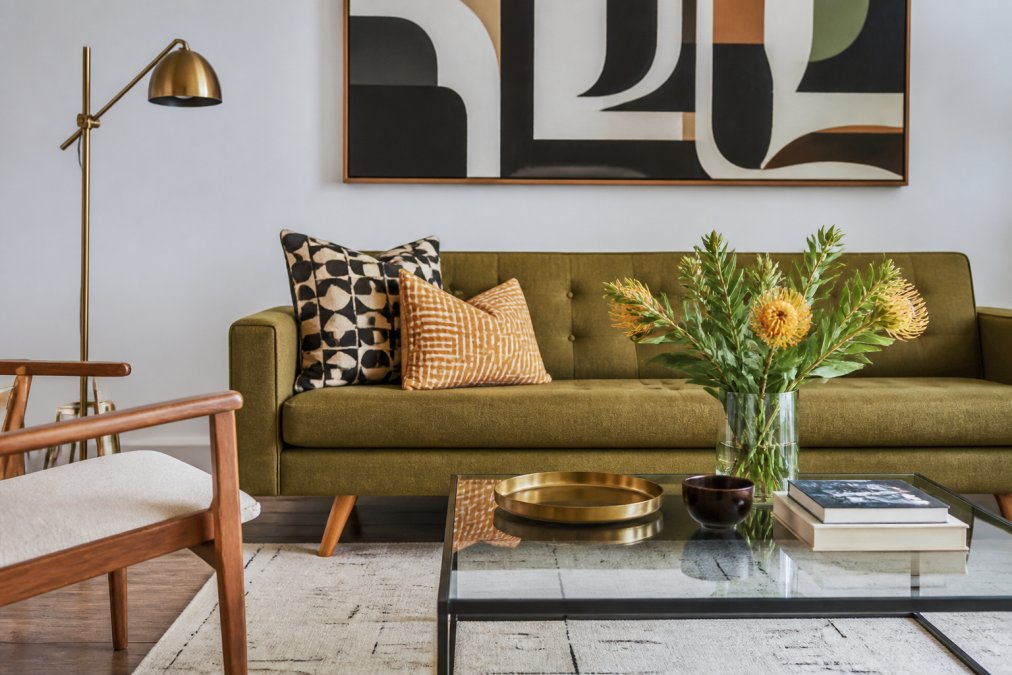
The Contrast Principle: Balancing Eras
Mix eras through intentional contrast: pair a sleek modern sofa with a vintage patterned rug, an ornate mirror above a minimalist console, or mid-century wood furniture next to contemporary metal. This creates visual interest without chaos.
Warm honey and walnut woods pair beautifully with cool grays and whites in modern furniture. thomaspaul's pieces bridge both worlds, featuring vintage-inspired patterns on modern silhouettes.
Layering Textures and Colors
Vintage pieces bring texture, worn leather, faded fabrics, patina on brass, that adds depth. Layer with smooth modern textures like polished concrete, glass, or matte ceramics.
Choose 2-3 neutral base colors, then layer vintage hues through accessories. Jewel tones or muted pastels on throw pillows add richness without overwhelming.
A vintage-inspired rug anchors a room; textiles on pillows, throws, and wall hangings add warmth. thomaspaul's handmade textiles feel genuinely vintage-inspired without requiring antique shop hunts.
Best Vintage Style Home Decor Brands and Where to Source
Finding quality vintage style home decor pieces means knowing where to look, what to expect at each venue, and how to evaluate value. Different sourcing channels offer different trade-offs between price, curation, and time investment.
Estate Sales vs. Thrift Stores vs. Online: Where to Find Real Value
Estate sales can offer good value if you arrive early. You'll often find matched sets and original documentation. Arrive before opening and be prepared for various payment methods.
Thrift stores are budget-friendly but require patience. Inspect joints, drawers, and upholstery for damage. Visit regularly as inventory turns fast. Best for accessories, textiles, and frames rather than major furniture.
Online marketplaces offer convenience but require verification. Ask for multiple photos including damage and maker's marks. Request video walkthroughs for furniture. Verify seller ratings before committing. Best for specific searches when you know exactly what you want.
Antique malls sit between thrift stores and estate sales with basic curation included. Use them when you want confidence in authenticity but lack time for estate sales. Negotiate on multi-item purchases.
Spotting Quality vs. Overpriced Stock
Check construction: solid wood sounds dense when tapped, veneer sounds hollow. Dovetail joints indicate quality; butt joints suggest mass production. Hand-stitching on upholstery shows attention to detail.
Original hardware adds to value and confirms era. Wiggle table legs and chair arms to assess stability; wobbly pieces may require repair.
Look for maker's marks inside drawers or underneath furniture. Documented makers increase value. Research marks before buying; some reproductions copy them.
Ask when the piece originated, its primary wood type, and whether it's been refinished or restored. Vague answers are red flags. Ask explicitly about smoke, pet, or water damage.
Avoid these red flags: strong odors (smoke, mold, pet urine are difficult to remove), active pest damage (look for droppings, holes, or live insects), water stains that feel soft or spongy (indicates rot), and mismatched replacement parts (suggests amateur repairs). A piece with one or two minor issues is fine; multiple problems signal a money pit.
Building a Sourcing Strategy by Budget
For smaller budgets, prioritize thrift stores and online marketplaces for accessories and small furniture. Expect to invest time in hunting for quality pieces.
For moderate budgets, mix thrift stores with estate sales. Estate sales can yield larger, higher-quality pieces; thrift stores fill in accessories and textiles. Expect to invest time in sourcing.
For larger budgets, prioritize estate sales and antique malls. You can afford to pay for curation and skip the thrift-store hunt. Allocate time to research makers and verify authenticity before purchasing. Consider hiring an estate sale buyer's agent.
Document every purchase. Photograph the piece, note the source, record the price, and save receipts. This builds a record that increases resale value and helps you track which venues yield the best finds.
Styling Vintage Accessories: Focal Points and Vignettes
Accessories are where styling vintage inspired home decor becomes fun. This is where personality emerges.
Creating Curated Vignettes on Shelves and Surfaces
A vignette is a small, intentional arrangement of objects that tells a story. Start with a focal point, a piece of vintage art, a sculptural object, or an interesting lamp. Build around it with 2-3 supporting pieces. Leave negative space. A crowded shelf feels chaotic. A thoughtfully arranged one feels curated.
Group items by height. Vary the scale. Mix textures. A brass candlestick next to a ceramic vessel next to a small framed print creates visual rhythm. Odd numbers work better than even ones, three items feel more natural than four.
Rotate your vignettes seasonally. This keeps your space feeling fresh and gives you a reason to rediscover pieces you own. It also prevents the "set it and forget it" feeling that makes vintage decor look stale.
Brass, Wood Tones, and Patina Details
Brass accessories add warmth and elegance. A vintage brass lamp, a set of brass candlesticks, or brass-framed mirrors create a cohesive metallic theme without feeling overdone. Patina, that aged, darkened finish, adds authenticity. Don't polish it away. The imperfection is the appeal.
Wood tones should feel intentional. If your furniture is warm honey wood, your accessories should echo that. If you're mixing wood tones, do it deliberately. Light oak with dark walnut creates contrast. Random mismatches just look accidental.
Layer metals thoughtfully. Brass, copper, and warm gold work together. Mixing brass with chrome or stainless steel creates jarring contrast unless that's your specific design goal.
Incorporating Vintage Art, Frames, and Wall Decor
Walls are where vintage style becomes visible. Art and frames set the tone for an entire room.
Look for original art from the eras you love. Prints from the 1950s, watercolors from the 1970s, or botanical illustrations from the 1800s all work if they align with your vision. Mix frame styles, ornate gold frames next to simple wood ones create visual interest. Don't feel obligated to match every frame. Intentional variety beats forced uniformity.
Vintage mirrors are functional and decorative. An ornate gilt-edged mirror reflects light and adds glamour. A simple wooden-framed mirror fits cottage or farmhouse aesthetics. Layer mirrors with art for dynamic wall arrangements.
Create a gallery wall with intention. Start with a large focal piece and build around it. Vary frame sizes and styles. Leave space between pieces, don't cram them together. Step back frequently to assess balance.
Vintage Textiles and Rugs: Foundation for Your Look
Textiles are the foundation of vintage inspired home decor. They set color, establish texture, and define the overall aesthetic.
Vintage rugs anchor a room.
Small-Space Vintage Styling and Sustainable Restoration
Vintage style works in small spaces when done carefully. It requires more intentionality but creates deeper character than modern minimalism.
Making Vintage Work in Compact Spaces
Choose fewer, larger pieces over many small ones. A substantial vintage dresser makes more impact than five small vintage boxes. A large statement mirror opens up the space visually while adding vintage charm.
Care and Sustainable Restoration Techniques
Restoration extends the life of vintage pieces and keeps them out of landfills. Learn basic care before attempting repairs. Dust regularly with soft cloths. Use appropriate cleaners for different materials, leather needs different care than wood.
Frequently Asked Questions
How do you mix vintage and modern decor without it looking cluttered?
The key is contrast and intentional placement. Choose a dominant era (vintage or modern) and let the other be the accent. Aim for a dominant style with the other as an accent. Group similar pieces together rather than scattering them, and ensure each vintage item has breathing room. Stick to a cohesive color palette across both eras, and let negative space prevent the space from feeling crowded.
What are the best vintage inspired home decor brands for textiles?
Look for brands that specialize in handmade textiles with vintage-inspired patterns and modern quality standards. Seek out designers with textile design backgrounds who blend retro aesthetics with contemporary craftsmanship. Check customer reviews to verify that items are genuinely handmade and not mass-produced. Boutique home decor brands often offer better provenance and unique designs than mass-market retailers.
How do you style vintage accessories on a bookshelf without making it look dated?
Create intentional vignettes by grouping accessories in odd numbers (three or five items). Mix heights, textures, and eras, pair a vintage brass candlestick with a modern ceramic piece. Leave negative space between groupings. Incorporate books, plants, and contemporary items to break up vintage pieces. Ensure the overall color palette feels cohesive, and rotate accessories seasonally to keep the display fresh and curated.
What makes a home look vintage inspired rather than dated?
Vintage inspired design intentionally mixes eras and includes contemporary elements, while dated design relies too heavily on one era without balance. Authentic vintage inspired homes feature quality pieces with patina and character, updated with modern functionality and fresh color palettes. The aesthetic feels curated and intentional, not like everything was collected by accident. Cleanliness, organization, and thoughtful accessorizing distinguish vintage inspired from cluttered or outdated.