

Made Goods vs Artisan Home Decor for Your Space
Posted by Editorial Team on Nov 2nd 2026
Quick Summary
Artisan home decor refers to pieces made by hand, often in small batches, where the craft and character of each object matter most. Made Goods is a brand name rather than a category, so it can carry artisan pieces, mass-produced items, or both.
- Artisan" describes how a piece is made, while a brand name describes who sells it.
- Handmade decor often varies slightly from piece to piece, while mass-produced decor follows one fixed design.
- Handmade" is not a regulated term, so ask the seller which steps were done by hand.
- Compare pieces only when category, dimensions, material, and finish match.
- Check return windows, damage claim deadlines, and whether original packaging is required before discarding boxes.
Table of Contents
- Made Goods vs Artisan Home Decor: What Each Term Means
- Handmade vs. Mass-Produced Home Decor: How Production Differs
- Materials, Durability, and Expected Longevity
- Price Comparison: Like-for-Like Pieces and What Drives the Cost
- Customization, Availability, Returns, and Damage Policies
- How to Verify Craftsmanship and Sourcing Claims
- Choosing Unique Home Decor Brands for Your Space
- Frequently Asked Questions
Made Goods vs Artisan Home Decor: What Each Term Means
Last Updated: November 2, 2026
If you're shopping for unique home decor, you've probably seen "Made Goods" and "artisan home decor" used almost interchangeably. At thomaspaul, we design vintage-inspired textiles and decor, so we're close to this question every day.
Artisan home decor generally refers to pieces made by hand, often in small batches, by individual makers or small studios.
Made Goods is a brand name rather than a category. Check its official site for current information on its products and production practices before comparing it to any artisan piece.
The practical takeaway: "artisan" describes how something is made, while a brand name describes who sells it. A brand can carry artisan pieces, mass-produced items, or both.
Handmade vs. Mass-Produced Home Decor: How Production Differs
Handmade decor is shaped by people at each stage.
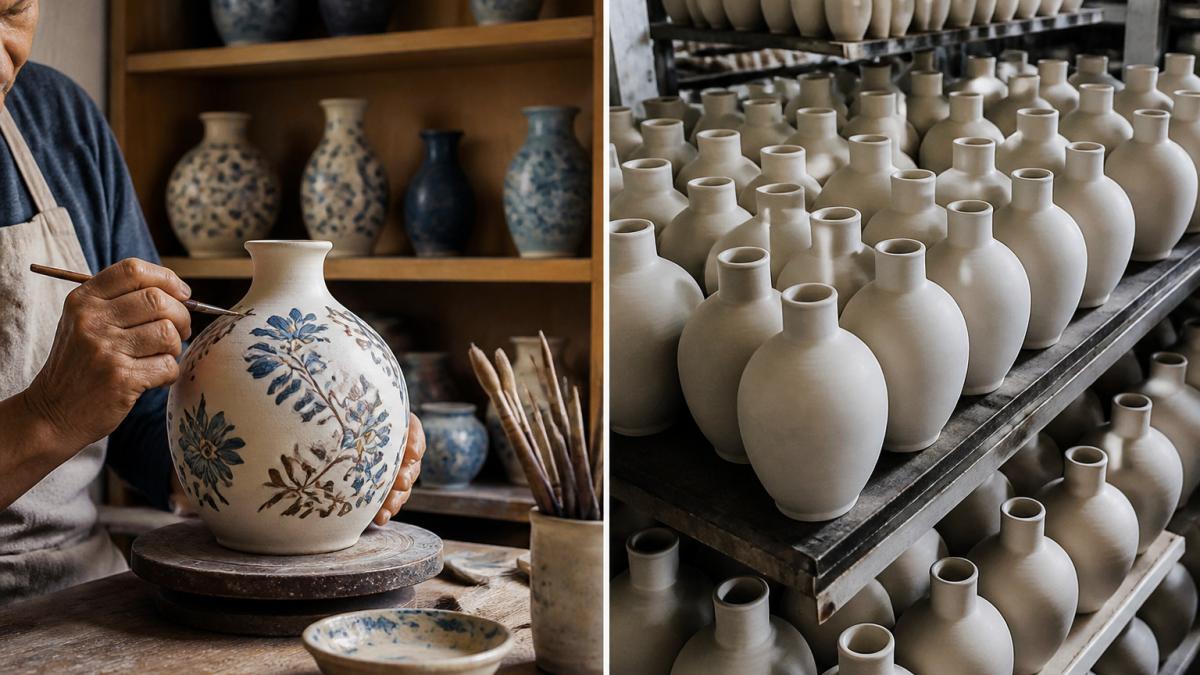
Mass-produced decor follows a fixed design across thousands of units. Machines and standardized processes deliver consistency, and that consistency is usually the point.
Artisan decor can cost more because of the time and skill involved, along with the quality of materials used.
Watch out: "handmade" is not a regulated term. Some pieces are partly machine-made, or finished by hand after machine production.
Materials, Durability, and Expected Longevity
Materials shape how a piece ages. Solid wood, hand-finished metal, and tightly woven textiles generally hold up longer than thin laminates or loosely constructed fabric.
Durability depends on use as much as build quality. A pillow in a sunny living room will fade faster than one in a guest room.
Judge any claims about durability, uniqueness, and craftsmanship against the materials listed for each piece.
Price Comparison: Like-for-Like Pieces and What Drives the Cost
A price comparison only means something when the two pieces are matched on category, size, material, and finish. Comparing a hand-thrown stoneware vase to a molded resin look-alike tells you nothing useful. Build the comparison category by category instead.
Match the category before you match the price
Use the same four checkpoints for every piece, whether it comes from a branded collection or an independent studio:
- Category and dimensions: A 20-inch square pillow cover is not comparable to a 22-inch one; a side table at 24 inches tall is not comparable to a 20-inch accent table.
- Primary material and construction: Solid ash versus ash veneer over engineered wood; stoneware versus earthenware; linen versus a linen-cotton blend.
- Finish method: Hand-applied glaze, hand-rubbed oil, or sprayed lacquer each carry different labor and durability profiles.
What typically drives the spread
Across furniture, lighting, wall art, and decorative objects, the same cost levers show up repeatedly:
- Labor hours per unit. Hand-finishing, hand-painting, and hand-weaving add time that a fixed production line does not.
- Material grade. Kiln-dried hardwood, high-fired ceramic, and long-staple fibers cost more at the input stage than laminates, low-fire clay, and short-staple blends.
- Batch size. Small runs cannot spread tooling and setup costs across thousands of units, so the per-piece overhead is higher.
- Finishing and QC. Individual inspection, touch-up, and packing add cost but also reduce the rate of arrived-damaged pieces.
How to build a fair side-by-side
- Pick one category at a time (for example, ceramic table lamps or framed art prints).
- Shortlist two to four pieces that match on dimensions and primary material.
- Note the included components, the finish method, and the stated lead time for each.
- Compare the total delivered cost, not the sticker price: add shipping, tax, and any assembly or insert costs.
- Re-check the return window and damage policy, because a cheaper piece with a short return window can cost more if it arrives wrong.
What buyers actually receive
A branded collection and an artisan studio can both deliver a well-made piece; the difference is usually in consistency versus variation.
Pricing varies by piece, material, and channel, so we do not publish a single price list here. Visit our site for current pricing, and collect the same data points from any other seller before you decide.
The article breaks down the main factors that drive price differences between comparable pieces.
| Cost driver | What it means | Why it matters |
|---|---|---|
| Labor hours per unit | Hand-finishing, painting and weaving add time | Adds cost a fixed production line does not |
| Material grade | Kiln-dried hardwood and high-fired ceramic cost more | Higher input cost than laminates or low-fire clay |
| Batch size | Small runs cannot spread setup costs | Higher per-piece overhead |
| Finishing and QC | Individual inspection and packing add cost | Reduces the rate of arrived-damaged pieces |
| Channel | Direct studio sales differ from showroom retail | Different overhead structure |
Customization, Availability, Returns, and Damage Policies
This is where two pieces that look alike online diverge most in practice. A branded collection and an artisan studio handle customization, stock, returns, and damage differently, and those differences affect your total cost and your timeline as much as the price tag does.
Customization: what is actually adjustable
Ask specifically which variables can change, not whether the seller "offers custom." Common options include:
- Dimensions: Custom sizing is most common in upholstery, case goods, and window treatments; it is rare in ceramics and glass.
- Finish and color: Paint, stain, and glaze options vary by material; some finishes add lead time.
- Configuration: Sectional layouts, shelf counts, and hardware choices are often configurable on branded lines and rarely on one-off artisan pieces.
- Personalization: Monograms, engraved plates, and custom framing are usually add-on services with their own lead times.
A branded collection typically publishes a fixed option matrix. An artisan studio may accept a commission, but commissions usually require a deposit, a design approval step, and a longer timeline. Confirm whether a deposit is refundable and at what stage.
Availability and lead times
Stock status is the single biggest driver of delivery time. Ask whether the item is in stock, made to order, or backordered, and get the answer in writing.
- In-stock items usually ship within a few business days, but "in stock" can mean "in stock at the warehouse" or "available to order", clarify which.
- Made-to-order items carry a production window before shipping; the total time is production plus transit.
- Backordered items carry an estimated restock date that can move; ask how the seller communicates changes.
For fragile categories such as ceramics, glass, and framed art, transit method matters as much as speed. Freight delivery for large furniture usually includes a scheduling call and may include room-of-choice placement; parcel delivery for smaller decor typically does not.
Returns: read the window and the conditions
Return policies differ on three axes: the window, the condition requirement, and who pays return freight.
- Window: Confirm the number of days and whether it runs from ship date or delivery date.
- Condition: Most sellers require original packaging and unused condition; some exclude custom and made-to-order items entirely.
- Freight: Return shipping on large furniture can be substantial, so confirm whether it is deducted from the refund.
Gift buyers should confirm whether the recipient can exchange an item and whether a gift receipt is available, since the original purchaser may not be the one handling the return.
Damage claims: act fast and document everything
Fragile decor is where damage policies earn their keep. A common pattern is to require photos of the item and the packaging within a short window after delivery, so inspect and photograph before discarding boxes.
- Inspect on arrival. Open and check the piece before the delivery team leaves if possible.
- Photograph the packaging and the damage. Keep the box and packing materials until the claim is resolved.
- File within the stated window. Note the deadline and the required documentation.
- Confirm the remedy. Ask whether the seller replaces, repairs, or refunds, and how long that takes.
A practical decision framework
If you need a piece by a specific date, prioritize in-stock items with a published transit estimate. If you want a specific size, finish, or configuration, accept a longer lead time and confirm the deposit terms. If the piece is fragile or expensive, weigh the damage policy and return freight as part of the total cost. The seller who answers these questions clearly is giving you the information you need to compare offers on equal terms.
How to Verify Craftsmanship and Sourcing Claims
Marketing language is easy to write. Verification takes a few concrete steps:
- Ask who makes the piece. A named maker or studio is a stronger signal than "our artisans."
- Request production details. Ask about materials, finishing methods, and whether any steps are machine-made.
- Read independent reviews. Look for reviews that mention the item's condition, weight, and finish in person or after months of use.
- Check the return policy. A seller confident in its quality usually offers clear return terms.
- Compare the description with photos. Close-up images can reveal finishing details that marketing copy skips.
A seller that answers these questions directly is giving you useful information. Vague answers are worth noting.
Choosing Unique Home Decor Brands for Your Space
Start with your space, not the brand. Measure the area, decide on a palette, and identify what you want the piece to do: anchor a room, add color, or start a conversation.
Then compare brands on the criteria above: production method, materials, price for comparable pieces, and policies.
If your style leans vintage-inspired, look for pieces with distinct patterns and quality construction. thomaspaul offers a curated collection of handmade home textiles and designer decor in that style.
Frequently Asked Questions
What are the characteristics of artisan-style decor?
Artisan-style decor usually shows visible making: slight variation in color, hand-applied patterns, natural or traditional materials and pieces that are often made in small batches. Each item tends to look a little different from the next, which is part of its appeal. Textiles may show hand-finished edges, and ceramics or wood may carry subtle tool marks. The style often pairs these traits with muted, vintage-inspired palettes. Checking product photos and maker descriptions for these details helps you judge whether a piece matches the style you want.
Is Made Goods considered artisan home decor?
Made Goods is widely discussed in the context of handmade and independently made home goods, but the research available for this article does not verify its current production methods, product range or pricing. Whether a specific Made Goods piece qualifies as artisan decor depends on how it was made and by whom. Check the product page for maker information, materials and production notes before deciding. Compare those details against the artisan criteria covered in this article.
Does artisan home decor cost more than mass-produced decor?
Often it does. Sources discussing artisan-made decor attribute the higher cost to the time, skill and quality materials involved in making each piece. The research available here does not provide a verified price comparison, so exact premiums vary by product, material and maker. Compare pieces of similar size and material rather than comparing a handmade item with a mass-produced one of a different type. Pricing for thomaspaul products depends on the item and current offers, so check the website for current prices.
How can you tell whether home decor is handmade?
Look for maker names, studio or workshop information and descriptions of the process in the product listing. Handmade pieces often show small irregularities such as uneven glaze, hand-stitched seams or slight differences in pattern repeat. Ask the seller how the item is made and where. Customer reviews that mention the maker and the finishing quality can also help. Be cautious when descriptions are vague or the same item appears on many unrelated sites.
Ready to find pieces with real character? Browse thomaspaul's handmade collection and sign up to save 20% on your first order. Our team is happy to answer questions about materials, care, and gifting before you buy.
