

Is Handmade Home Decor Worth the Premium?
Oct 7th 2026
Table of Contents
- Handmade vs. Mass-Produced Home Decor: The Core Differences
- Why Handmade Products Are Expensive
- Handmade Decor Price Comparison: What You're Actually Paying For
- How to Identify Handmade Home Decor
- The Real Benefits: Durability, Uniqueness, and Emotional Value
- Is the Premium Worth It? A Practical Framework
- Frequently Asked Questions
Last Updated: October 7, 2026
Handmade vs. Mass-Produced Home Decor: The Core Differences
Handmade home decor worth the premium comes down to understanding what separates artisanal pieces from factory-made alternatives. The difference isn't just aesthetic, it's structural, philosophical, and rooted in how each piece comes into existence.
When you buy mass-produced decor, you're purchasing an item manufactured at scale using standardized molds, templates, and assembly lines. When you buy handmade, you're acquiring something shaped by human hands, individual attention, and often a specific maker's creative vision. These aren't subtle distinctions. They cascade through every aspect of the product: durability, uniqueness, repairability, and emotional resonance.
How Production Methods Shape Quality and Design
Mass-manufactured home decor prioritizes efficiency and cost reduction. Factories optimize for speed, cutting, stitching, printing, or molding thousands of identical pieces. This consistency is valuable for certain applications, but it comes with trade-offs. Corners get cut. Seams are reinforced just enough to meet minimum standards.
Handmade production inverts these priorities. An artisan making textiles, ceramics, or wall art typically produces far fewer pieces. Each item receives direct attention. Stitching is reinforced where it matters. Material choices reflect quality first, cost second. The maker's reputation is tied to every piece that leaves their studio.
This distinction shapes design integrity. Mass-produced items follow trends because trends drive volume sales. Handmade pieces often emerge from a maker's personal aesthetic or cultural tradition, patterns that may not be fashionable today but carry lasting appeal precisely because they weren't designed to expire.
Attention to Detail and Workmanship Standards
Here's where most people underestimate handmade goods. The difference between adequate and exceptional isn't always visible at first glance. It reveals itself over time, in how seams hold, how colors resist fading, how the piece feels in your hands.
Handcrafted items typically feature:
- Hand-stitched seams with reinforcement at stress points
- Natural material selection prioritized over synthetic alternatives
- Quality control performed by the maker, not a sampling algorithm
- Visible artisan marks that prove human involvement
Mass-produced items, by contrast, rely on mechanized quality gates. A machine flags defects within programmed tolerances. Anything outside those parameters gets rejected. The problem: those parameters are set to minimize waste, not maximize longevity.
Why Handmade Products Are Expensive
If you've ever wondered why a handmade pillow costs three times more than a similar-looking mass-market version, the answer isn't mystique or marketing. It's mathematics.
Labor, Materials, and Artisan Expertise
An artisan producing textiles by hand invests time that a factory condenses into seconds. A single handwoven throw pillow might require 8-12 hours of labor. That same pillow, mass-produced, takes minutes to manufacture. The labor differential alone explains a significant portion of the price gap.
Material costs follow a similar pattern. Artisans typically source premium fabrics, natural dyes, and sustainable materials, choices that reflect their values and their product's intended lifespan. Mass manufacturers negotiate bulk pricing on commodity materials. Cheaper isn't always worse, but it's rarely better.
Artisan expertise carries its own cost. A textile designer trained in traditional weaving techniques, or a ceramicist with decades of kiln experience, commands compensation that reflects their skill. This expertise translates into products that perform better and age more gracefully than mass-produced equivalents.
Limited Production and Design Integrity
Handmade goods are inherently scarce. An artisan producing 50 pieces per month will never compete on volume with a factory producing 50,000. This scarcity isn't a bug, it's a feature that protects design integrity.
When a designer knows they're making 50 pieces, not 50,000, they can afford to be selective. They choose materials that age beautifully rather than materials that ship cheaply. They refine techniques that take time but deliver superior results. They stand behind each piece personally.
Mass production demands volume to justify tooling costs and factory overhead. This creates pressure to cut corners, simplify designs, and prioritize speed. The economics of scale work against the kind of meticulous attention that defines handcrafted work.
Handmade Decor Price Comparison: What You're Actually Paying For
Understanding pricing requires separating the actual cost drivers from the mythology. Handmade home decor worth its premium when you understand what premium actually means.
Initial Investment vs. Long-Term Value
A handmade throw pillow might cost $120. A mass-produced alternative might cost $35. The immediate math seems clear: the handmade version is 3.4 times more expensive.
But that comparison ignores lifespan. A well-made handcrafted pillow typically lasts 10-15 years with normal use. Mass-produced versions often show visible wear, fading, seam separation, loss of shape, within 2-3 years.
Amortized over time, the handmade pillow costs roughly $8-12 per year. The mass-produced version costs $12-17 per year. The "expensive" option becomes the economical choice.
This calculation applies across categories: handmade art prints, textiles, ceramics, and kitchenware. The higher initial investment is offset by extended lifespan and sustained aesthetic appeal.
Resale Value and Investment Potential
Here's an angle most guides skip: handmade pieces often retain or appreciate in value. A handwoven textile from an established artisan can be resold at 60-80% of its original price. Mass-produced decor typically resells at 10-20% of retail.
This matters if you're decorating a rental, experimenting with a new aesthetic, or simply want flexibility. Handmade pieces become assets. Mass-produced pieces become waste.
Some handmade work, particularly pieces from recognized designers or cultural traditions, appreciates over time. A vintage textile or ceramic piece can become more valuable as the maker's reputation grows or as the work becomes harder to find.
| Factor | Handmade | Mass-Produced |
|---|---|---|
| Initial cost | Higher | Lower |
| Expected lifespan | 10-15 years | 2-4 years |
| Resale value | 60-80% of original | 10-20% of original |
| Cost per year of use | $8-15 | $12-20 |
| Design uniqueness | One-of-a-kind or limited | Identical copies |
| Emotional connection | Strong | Minimal |
How to Identify Handmade Home Decor
Not everything labeled "handmade" actually is. The market includes legitimate artisans, small manufacturers using some hand processes, and outright fraudsters dropshipping mass-produced goods under artisan branding.
Authenticity Markers and Quality Control
Genuine handmade pieces carry visible signatures of human production. Look for:
- Slight variations between pieces (no two are identical)
- Visible stitching or joinery that shows intentional technique
- Natural material imperfections, color variation in natural dyes, minor texture inconsistencies
- Weight and heft appropriate to the materials (handmade ceramics feel substantial)
- Seams and edges finished with care, not just functionally
Red flags include:
- Perfect uniformity across multiple pieces
- Suspiciously low prices for claimed handmade work
- Vague descriptions of production methods
- Stock photography rather than actual product photos
- No maker information or bio
Verifying Artisan Claims and Ethical Sourcing
Before purchasing, verify the maker's legitimacy. Check for:
- A dedicated website or established marketplace presence (Etsy, Amazon Handmade)
- Customer reviews that mention quality and authenticity
- Clear attribution, the maker's name, background, and production location
- Transparency about material sourcing
For premium pieces, look for certifications or partnerships that indicate ethical production. Fair-trade designations, artisan cooperative memberships, or documented partnerships with specific cultural communities add credibility.
At thomaspaul, our handmade home textiles and designer decor reflect a commitment to authentic craftsmanship and transparent sourcing.
The Real Benefits: Durability, Uniqueness, and Emotional Value
The premium for handmade goods isn't primarily about status or trend-following. It's about acquiring something built to last, impossible to replicate, and genuinely connected to human creativity.
Longevity and Maintenance Costs
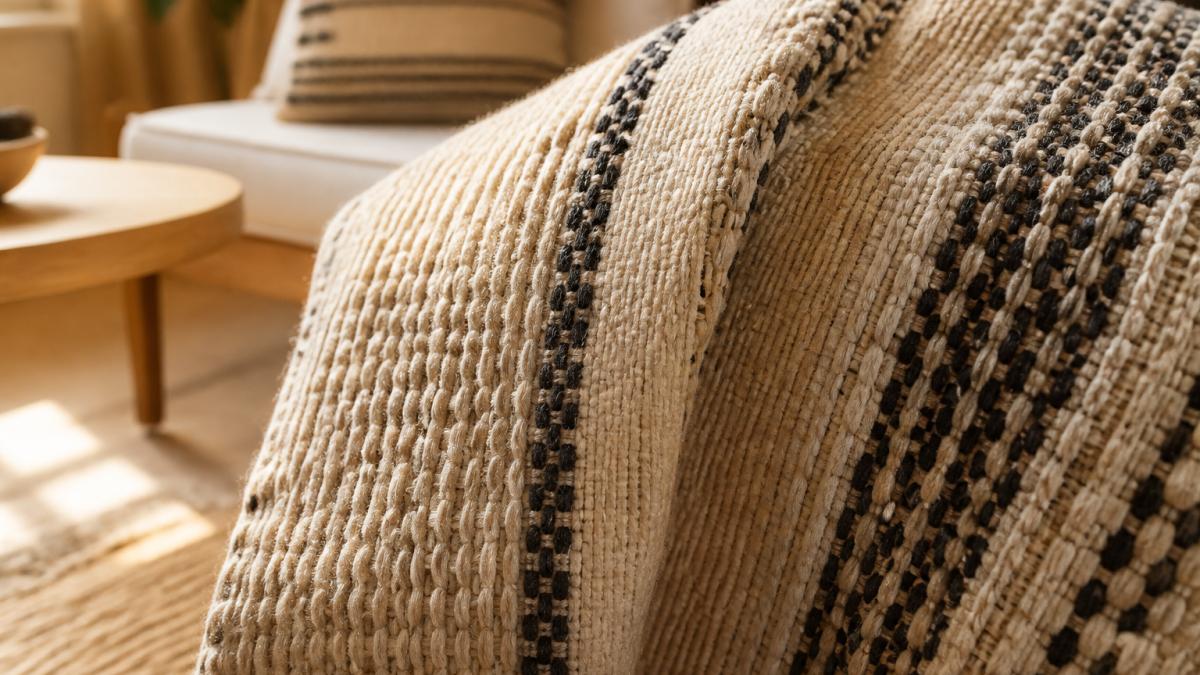
Handmade pieces age differently than mass-produced decor. A well-constructed handwoven throw doesn't just survive years of use, it often improves. Natural fibers develop patina. Dyes deepen. The piece becomes more beautiful as it accumulates history.
This durability reduces long-term maintenance costs. You're not replacing worn-out items every few years. You're occasionally refreshing or repairing pieces that remain structurally sound.
Mass-produced decor, by contrast, often reaches end-of-life faster than the styles go out of fashion. Seams fail. Prints fade. Synthetic materials deteriorate. You replace rather than repair.
Personalization and Storytelling
Handmade decor transforms a space into a narrative. Each piece carries information: where it was made, by whom, from what materials, and often why. This storytelling dimension, the emotional connection between maker and user, is something mass production fundamentally cannot replicate.
When you decorate with handmade pieces, you're not just furnishing a room. You're curating a collection of objects that reflect your values and aesthetic. Visitors notice. They ask questions. The space becomes a conversation rather than a backdrop.
This emotional resonance is particularly valuable for significant spaces, nurseries, home offices, gathering areas. A handmade textile in a child's room carries different weight than a mass-produced equivalent. It feels intentional, thoughtful, protective even.
Is the Premium Worth It? A Practical Framework
The answer depends on your priorities, budget, and how you use your space. Not every piece in your home needs to be handmade. But strategic investment in key items pays dividends.
Consider handmade for:
- High-traffic textiles (throw pillows, blankets, rugs) where durability matters
- Focal point pieces (wall art, statement ceramics) where uniqueness enhances the space
- Items with emotional significance (gifts, inherited pieces, items tied to memories)
- Long-term investments (pieces you plan to keep for 10+ years)
Consider mass-produced for:
- Temporary decor (seasonal items, trend-driven accessories)
- Experimental pieces (testing a new aesthetic before committing)
- Bulk items (multiple matching pieces where uniformity matters)
- Budget-constrained situations (furnishing on a tight timeline)
Budget-Friendly Hybrid Approaches
You don't need to choose between handmade and mass-produced exclusively. A hybrid approach maximizes impact while respecting budget constraints.
Start with 2-3 handmade anchor pieces, perhaps a statement pillow, an art print, or a textile. These become the collection's foundation.
Alternatively, prioritize handmade in categories where durability directly impacts satisfaction. A handmade throw blanket used daily justifies premium pricing. Decorative mass-produced items used occasionally don't.
Another approach: invest in handmade pieces gradually. Rather than furnishing an entire room at once, acquire one handmade item per season.
At thomaspaul, our curated collection offers pieces that let you build a space reflecting your aesthetic.
Is handmade home decor worth the premium? For most people, the answer is yes, but strategically, not universally. The premium reflects real differences in durability, uniqueness, and emotional value.
Frequently Asked Questions
Is handmade home decor really better quality than mass-produced pieces?
Handmade decor typically offers superior quality in materials and construction, with artisans selecting premium raw materials and applying careful attention to detail at every step. Mass-produced items prioritize cost efficiency, often using lower-grade materials and automated processes that skip hand finishing. Handmade pieces generally last longer and age more gracefully, though quality varies by maker. Check for specific material information and maker credentials before purchasing to verify claims of superior craftsmanship.
How can you tell if home decor is genuinely handmade?
Genuine handmade decor shows visible signs of artisan creation: slight variations in pattern, unique texture, hand-stitched seams, and maker's marks or signatures. Reputable sellers provide transparent information about their production process, materials sourcing, and artisan background. Look for detailed product descriptions, maker bios, and customer reviews mentioning quality details. Marketplaces like Etsy and Amazon Handmade verify artisan status, while independent retailers should offer clear documentation of their craft and sourcing practices.
What handmade home decor items are worth investing in?
Invest in handmade pieces you'll use daily or display prominently: textiles like pillows and throws, wall art with timeless aesthetic appeal, and serving pieces or kitchenware you'll enjoy for years. Items with strong design integrity and premium natural materials hold value better. Vintage-inspired designs with classic patterns tend to age well emotionally and stylistically. Avoid trend-driven pieces unless you're comfortable with them feeling dated. Consider your lifestyle and commitment to the style before investing in larger pieces like area rugs or statement furniture.
Should handmade home decor cost significantly more than mass-market alternatives?
Yes, but the premium reflects real differences in labor, materials, and production scale. Handmade items require skilled artisan time, premium sourcing, and smaller batch production, while mass-manufactured goods benefit from automation and volume pricing. The price gap varies by category and maker reputation. Budget-conscious buyers can find quality handmade pieces at moderate premiums by exploring independent artisans and platforms like Etsy, or by mixing handmade statement pieces with affordable mass-produced basics in the same space.