

How to Choose Timeless Home Decor That Lasts
Posted by Editorial Team on Nov 4th 2026
Quick Summary
Timeless home decor starts with natural materials like solid wood, stone, clay, linen and wool, plus matte or satin finishes that hide wear. Choose classic furniture shapes sized to your room, a flexible neutral palette, and pieces that fit your home's architecture and daily habits.
- Check the material list before the color and favor solid wood, stone, clay and natural fibers.
- Choose matte or satin finishes, since they hide fingerprints and wear better than high gloss.
- Measure your wall and floor space so furniture scale suits the room, not just the photo.
- Use one or two warm or cool neutrals for walls and large furniture, and add accents you can swap.
- Run each candidate piece through the five-question checklist, starting with durability and versatility.
Table of Contents
- Start With Natural Materials and Durable Finishes
- Pick Classic Furniture Shapes and Balanced Proportions
- Build a Flexible Neutral Color Palette
- Work With Your Home's Architecture and Timeless Design Details
- Choose Timeless Home Decor Styles That Fit Your Space
- Room-by-Room Timeless Home Decor Ideas for Small and Rental Spaces
- Plan Your First Timeless Pieces Using a Modern Timeless Interior Design Checklist
- Frequently Asked Questions
Start With Natural Materials and Durable Finishes
Timeless home decor starts with what a piece is made of. Pieces built from wood, stone, clay, linen, wool and cotton tend to age well, while thin plastics and printed veneers often look tired within a season or two. When you shop, check the material list before you check the color.
Look for solid wood or hardwood veneer over particleboard. Choose stoneware or solid ceramic over hollow, glossy-coated pieces.
Finish matters too. A matte or satin finish hides fingerprints and wear better than a high-gloss coating, which shows every scratch.
- Check the material list before the photo
- Prefer solid wood, stone, clay and natural fibers
- Choose matte or satin finishes for everyday use
Pick Classic Furniture Shapes and Balanced Proportions
Classic shapes outlast trends because they work with the way people actually sit, store and move through a room. A simple sofa with clean arms, a tapered leg or a turned wood leg rarely feels dated.
Scale is the bigger issue. A sofa or table that is too large or too small for the room throws off the whole space, no matter how good the piece looks online. Measure your wall and floor space before you buy.
Watch out: an oversized statement piece bought for a single photo often feels wrong in a real room within a few months.
Build a Flexible Neutral Color Palette
Neutral colors give you room to change your mind. Warm gray, cream, oatmeal and soft white work with almost any accent you add later, from a bold pillow to a new throw.
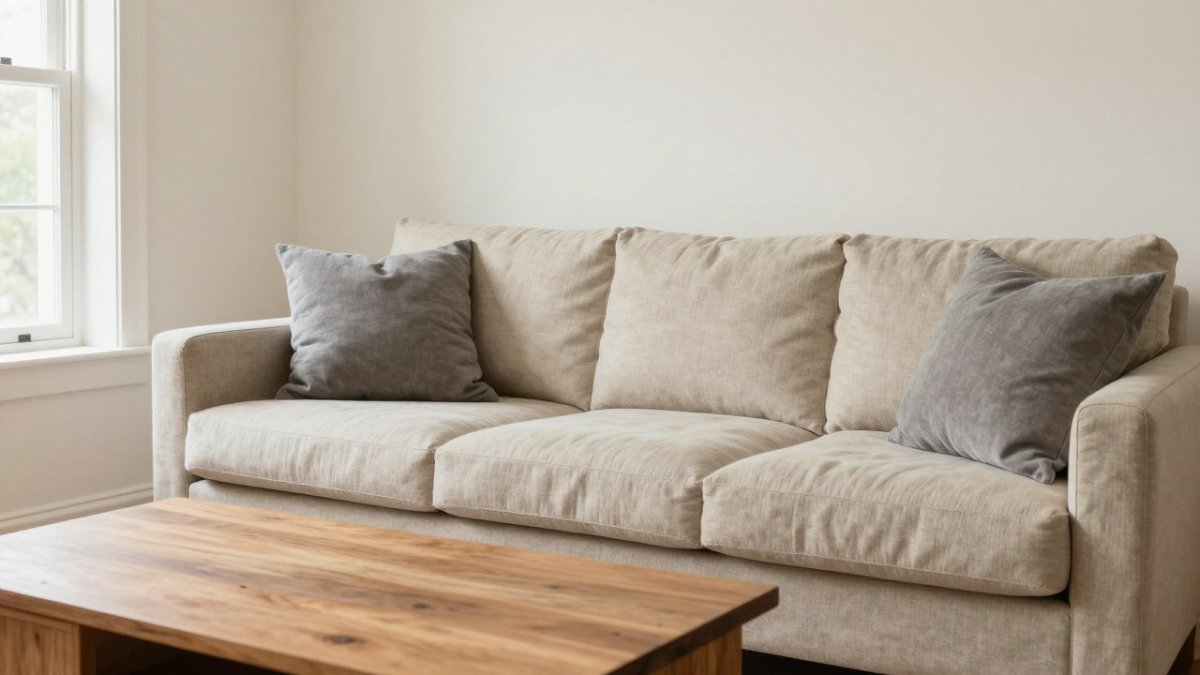
Start with one or two base neutrals for your walls and large furniture. Then add accents in colors you can swap out easily, such as textiles and art.
!Living room with cream walls, oatmeal linen sofa, warm gray throw pillows and a wood coffee table in soft daylight
- Pick one warm and one cool neutral to avoid clashing tones
- Use accent colors through pillows, rugs and art
- Keep large, expensive pieces in neutral tones
Work With Your Home's Architecture and Timeless Design Details
Your home already has a style. Crown molding, wood trim, arched doorways and built-in shelves set the tone. Choose decor that fits those features rather than fighting them.
If your home has classical details, simple lines and classic shapes will look right. If it is more modern, clean-lined pieces suit it better. Matching your decor to the architecture makes the whole space feel intentional.
Choose Timeless Home Decor Styles That Fit Your Space
Timeless interior design does not mean one look. Traditional, transitional and modern timeless styles all work when they share good materials and balanced proportions.
Think about how you live. A family with pets may prefer durable finishes. A couple who entertains often may want a dining table with generous seating.
Pick a style that matches your daily habits, then let your favorite pieces guide the rest.
Room-by-Room Timeless Home Decor Ideas for Small and Rental Spaces
Most timeless-decor advice assumes you can paint walls, swap fixtures, and install permanent finishes. If you rent or live in a small space, that advice does not apply. The workable approach is to put your money into pieces that move with you and to use decor, not construction, to carry the room. The recommendations below assume you cannot alter walls, floors, or built-ins, and they focus on scale, portability, and materials that survive repeated moves.
Living room. A sofa in the 72-84 inch range fits most small living rooms and still seats three. Choose a neutral performance fabric or a tight-weave linen blend; both resist pilling and clean up better than loose weaves. Anchor the room with a rug sized so the front legs of the sofa sit on it, typically an 8x10 in a small living room, a 5x8 only if the sofa is under 70 inches. A round or oval coffee table eases traffic flow in narrow rooms. Keep large pieces neutral and put pattern in pillows, a throw, and art you can roll and move.
Bedroom. Linen or cotton bedding in cream, oatmeal, or warm gray is a portable timeless choice. If you rent, a headboard that attaches to the wall or hangs from a French cleat avoids drilling into the frame and travels easily. One textured throw and two lamps with warm bulbs (2700K) do more for the room than a full matching set.
Kitchen. You likely cannot change cabinets or counters, so treat the visible surfaces as decor. Open shelving you install with removable brackets, a stoneware crock for utensils, and a wood cutting board left out on the counter add warmth without permanence. Avoid porous stoneware for daily use if you hand-wash; sealed ceramic and glazed stoneware hold up better. A washable runner in front of the sink protects floors and hides wear.
Entryway. A bench under 40 inches wide, a wall-mounted hook rail installed with removable adhesive strips rated for the load, and one framed print set the tone. A lidded basket for shoes keeps clutter out of sight and moves with you.
Bathroom. Renters can swap the shower curtain, bath mat, and towel hooks without touching tile or fixtures. A cotton or linen shower curtain is one option to consider. A small wood stool or a lidded hamper adds a natural material without installation.
Rental-specific rules that protect your deposit and your investment.
- Prefer freestanding furniture over built-ins; it moves with you and leaves no holes.
- Use removable adhesive hooks rated for the actual weight, most failures come from overloading, not from the adhesive.
- Choose rugs with a pad; they protect floors and reduce the wear that shows up in move-out inspections.
- Avoid pieces sized to one exact wall; a sofa or dresser that fits two or three layouts survives a move.
- Keep large pieces in neutral tones so a new wall color in the next place does not clash.
Watch out: a piece bought to fit one specific alcove or wall often becomes the reason you cannot rearrange a room, measure the piece against your next likely layout, not just the current one.
Plan Your First Timeless Pieces Using a Modern Timeless Interior Design Checklist
A checklist only helps if each question forces a real decision. The five questions below are ordered from hardest to reverse to easiest, so you can stop a bad purchase early. Use them before you buy, not after the piece is in the room.
1. Durability: will it survive ten years of normal use? Look at the joinery, not just the finish. Dovetail or mortise-and-tenon joints are generally considered more durable than stapled and glued construction. When shopping for upholstery, ask the seller about the fabric's rub rating, since it indicates suitability for different levels of use.
2. Versatility: will it work in more than one room and more than one layout? A piece that only fits one wall or one color scheme is a trend purchase in disguise. Neutral tones, simple silhouettes, and standard dimensions (a sofa under 84 inches, a dining table that seats six without a leaf) travel between rooms and homes. Ask whether the piece would work in at least two rooms you can imagine living in.
3. Scale: does it fit the room, not just the photo? Measure the wall, the floor space, and the walking path before you buy. A common pattern is buying a piece sized to a single inspiration photo and finding it crowds the room. Leave at least 30-36 inches for main walkways and 18 inches between a sofa and a coffee table.
4. Maintenance and lifecycle cost: what will it cost to keep? The purchase price is only part of the cost. Solid wood may need occasional oiling or waxing, and linen may need pressing. Consider the total cost of upkeep and replacement over time, not just the purchase price.
5. Compatibility: does it work with what you already own and with your household? Check the piece against your existing neutral base, your floor tone, and the people and pets who will use it. A white linen sofa in a house with two dogs is a maintenance decision, not a style decision. If the piece fails this question, no amount of good design saves it.
How to use the checklist. Run every candidate through questions 1 and 2 first, they are the hardest to fix later. If a piece passes both, check scale and maintenance, then compatibility last. Buy one or two pieces at a time and live with them before adding more; this keeps your budget controlled and teaches you what you actually use.
Watch out: a piece that passes every question on paper but fails the scale test in your actual room is the most common expensive mistake, measure the room, not the inspiration photo.
The five checklist questions, ordered from hardest to reverse to easiest, are summarised below so you can scan them before buying.
| Question | What to check | Key number or note |
|---|---|---|
| Durability | Joinery and upholstery rub rating | Dovetail or mortise-and-tenon joints |
| Versatility | Works in more than one room or layout | Sofa under 84 inches; table seats six |
| Scale | Wall, floor space and walking path | 30-36 inches walkway; 18 inches sofa to table |
| Maintenance | Total upkeep and replacement cost | Oiling, waxing or pressing as needed |
| Compatibility | Fits existing base, floors and household | Pets and users affect the choice |
Frequently Asked Questions
What is the 70/30 rule in decorating?
The 70/30 rule suggests that about 70 percent of a room should use a consistent base of neutral or classic pieces, such as sofas, rugs and case goods, while the remaining 30 percent can carry personality through accent pieces, art and textiles. The approach keeps a space cohesive while leaving room for trend-driven or personal items that are easy to swap out later. It is a flexible guideline, not a strict formula, so adjust the ratio to fit how much you want to change over time. Starting with the 70 percent base makes timeless home decor easier to build without committing to every passing style.
How do I choose home decor that will not go out of style?
Focus on natural materials such as wood, stone, linen and wool, classic furniture silhouettes with simple lines and balanced proportions, and neutral or flexible color palettes. Prioritize quality construction over low prices, since well-made pieces hold their form and finish for years. Save bold patterns and trendy colors for pillows, throws and art, where replacing them costs far less than swapping a sofa or rug. Checking how a piece fits your home's existing architecture also helps it feel intentional rather than dated. Pricing varies by retailer, material and size, so compare current quotes directly with the seller.
What colors and materials make a home feel timeless?
Warm neutrals such as cream, oatmeal and warm gray tend to read as timeless because they pair easily with almost any accent color and do not signal a specific decade. Natural materials like marble, oak, linen, cotton and stoneware add texture and depth that synthetic finishes often lack. Pairing two or three materials, such as a wood table with a woven rug and ceramic lamp, creates a layered look that feels collected rather than matched. Avoid making every surface the same finish, which can look flat and temporary.
How can I make a small space look timeless without cluttering it?
Choose fewer, better pieces with simple shapes and clean lines, and give each one room to breathe. Use a limited palette of two or three neutrals plus one accent, and repeat it across textiles and art so the room reads as calm. Furniture with visible legs makes a small room feel lighter than heavy, skirted pieces. Renters can achieve the same effect with removable decor such as lamps, washable throws and framed prints that move easily between homes.
