

Handmade vs Mass-Produced Home Textiles: A 2026 Guide
Posted by Editorial Team on Oct 16th 2026
Table of Contents
- What Handmade and Mass-Produced Home Textiles Mean
- Handmade vs Machine-Made Textiles: Production Methods and Craftsmanship
- How to Identify Handmade Textiles: What to Look For
- Handwoven vs Machine-Woven Fabric: Construction and Durability
- Handmade Home Decor Quality and Value: What Justifies the Price
- Environmental Impact and Sustainability
- Handmade vs Mass-Produced: A Practical Comparison
- Which Should You Choose for Your Home
- Frequently Asked Questions
Last Updated: October 16, 2026
What Handmade and Mass-Produced Home Textiles Mean
Handmade home textiles are fabrics and textile products created primarily through manual labor and traditional techniques, often produced in small batches or individually. Mass-produced home textiles are manufactured at scale using industrial machinery and automation, designed for rapid production and broad market distribution.
At thomaspaul, we work with artisan-made home textiles that reflect the handmade philosophy: each piece carries the intentionality and craftsmanship that separates a designed object from a commodity. Understanding the real differences between handmade vs mass produced home textiles helps you make purchasing decisions aligned with your values, aesthetic, and budget.
The production methods create cascading differences. Handmade textiles rely on skilled labor, often employing traditional techniques passed down through generations. Mass production prioritizes speed and consistency, using standardized processes to manufacture thousands of units in the time it takes to complete a single handmade piece.
Handmade vs Machine-Made Textiles: Production Methods and Craftsmanship
Handmade textiles begin with a maker's vision and end with their hands. A weaver at a loom, a dyer working with natural materials, a printer applying patterns by hand, each step reflects individual decision-making and skill.
Machine-made textiles follow a different logic. Industrial looms operate continuously, controlled by computer programs and mechanical systems. A designer creates a pattern once; machines reproduce it thousands of times with identical precision. This efficiency drives down per-unit costs and enables consistent quality control at massive scale.
The craftsmanship difference matters most when it affects the final product. Handmade textiles often show subtle variations, slight irregularities in weave tension, natural dye variations, or unique color shifts, that many people perceive as character rather than flaws.
Production methods also influence material choices. Artisans working by hand often select premium materials because they're more enjoyable to work with and produce superior results.
How to Identify Handmade Textiles: What to Look For
Verifying that textiles are actually handmade requires knowing what to examine.
Start by examining the weave structure. Handwoven fabrics show natural variation in thread tension.
Check the edges and seams. Handmade textiles often have finished edges that reflect individual attention, perhaps hand-stitched hems or selvage edges that are clearly handled with care.
Ask about the production process directly. Reputable makers like thomaspaul provide transparent information about how pieces are made, who makes them, and what materials are used.
Look for documentation. Genuine handmade textiles often come with maker information, sometimes even the artisan's name or signature.
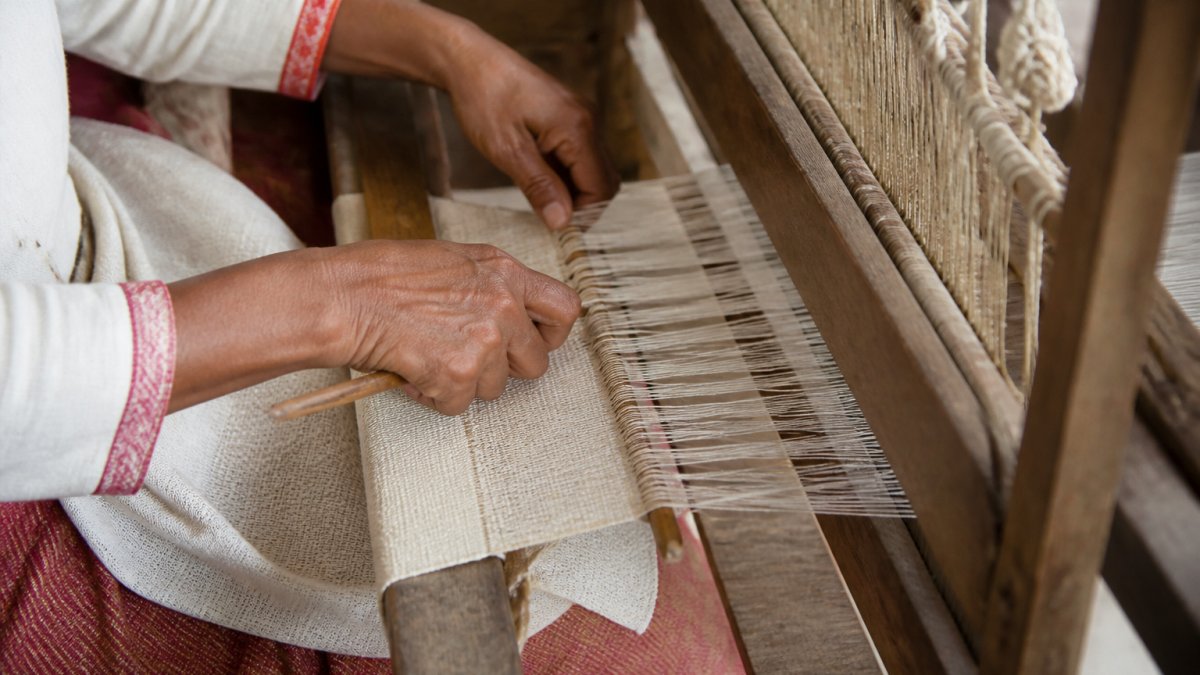
Natural fiber content is another indicator. Handmade textiles frequently use pure linen, wool, cotton, or silk because artisans appreciate how these materials behave.
Handwoven vs Machine-Woven Fabric: Construction and Durability
Handwoven textiles typically have lower thread density than machine-woven alternatives, which sounds like a disadvantage but often isn't. The hand-selected tension and material quality compensate.
Durability depends on multiple factors beyond construction method. A poorly made handwoven textile can fail faster than a well-engineered mass-produced one.
Repairability matters here. Handwoven textiles are easier to repair because the construction is more straightforward and less dependent on complex machinery. A loose thread or small tear in handwoven fabric can often be mended by hand.
The aging process differs too. Handwoven textiles made from natural fibers soften and improve with use, developing patina and character.
Handmade Home Decor Quality and Value: What Justifies the Price
The price difference between handmade and mass-produced textiles often feels stark at first glance. A handmade pillow cover might cost three times what a mass-produced alternative costs. Understanding what justifies that premium requires looking beyond the purchase price to the actual value delivered.
Material Quality and Sourcing
Handmade textiles almost always use higher-grade materials. Artisans source premium fibers because they work directly with the material and understand how quality affects the final result. They select linen with better hand feel, wool with superior softness, or cotton with genuine durability.
Mass production optimizes material selection for cost efficiency. A manufacturer might choose polyester-cotton blends instead of pure cotton because the blend costs less and meets minimum durability standards. The performance difference might be minimal, but the material quality gap is real.
Natural fiber sourcing also differs. Handmade producers often work with suppliers who prioritize sustainable harvesting and ethical practices. Mass manufacturers prioritize volume and cost, which sometimes means sourcing from suppliers where environmental and labor practices receive less scrutiny.
Longevity and Cost Per Use
A handmade textile that costs more but lasts twice as long actually costs less per year of use. This is where the "handmade premium" often becomes economically rational rather than purely aesthetic.
Calculate cost per use over a realistic lifespan. A handmade linen napkin set that costs more but lasts 15 years of weekly use actually costs less per use than a mass-produced set lasting 5 years. Factor in replacement frequency, repairs, and the environmental cost of discarding worn items.
Handmade textiles also maintain their appearance longer. They resist pilling, fading, and degradation better than many mass-produced alternatives. A handwoven throw that looks beautiful after 10 years of use versus a machine-made throw that looks tired after 3 years tells the real cost story.
Repairability and Lifecycle Value
The ability to repair a textile extends its useful life significantly. Handmade pieces, built with traditional construction methods, are usually repairable. A loose seam can be re-stitched, a small hole can be patched, a faded area can sometimes be refreshed.
Mass-produced textiles often aren't worth repairing because labor costs exceed replacement costs. The construction sometimes makes repair impractical, complex weaves or integrated synthetic materials resist simple fixes.
This repairability premium is real but often invisible until something goes wrong. A handmade textile you can repair indefinitely has fundamentally different lifecycle economics than a disposable mass-produced one.
Environmental Impact and Sustainability
The environmental comparison between handmade and mass-produced textiles is more nuanced than marketing often suggests. Both production methods have environmental consequences; they just differ in type and scale.
Mass production creates concentrated environmental impact. Industrial textile manufacturing uses enormous water volumes, generates significant chemical waste, and relies on energy-intensive machinery. A single factory producing millions of units annually creates environmental impact at scale.
Handmade textile production typically uses less water and fewer chemicals per unit because the process is slower and more controlled.
The real environmental advantage of handmade textiles comes from longevity. A textile that lasts twice as long requires half as many replacements, cutting the total environmental footprint in half.
Natural fiber sourcing also matters. Handmade producers often use untreated natural fibers, while mass production sometimes relies on synthetic alternatives or heavily processed materials. Natural fibers biodegrade; synthetics persist for decades in landfills.
Handmade vs Mass-Produced: A Practical Comparison
| Factor | Handmade | Mass-Produced | Best For |
|---|---|---|---|
| Production Speed | Weeks to months | Days to weeks | Handmade for patience; mass-produced for urgency |
| Design Uniqueness | Highly unique | Standardized patterns | Handmade for one-of-a-kind; mass-produced for consistency |
| Material Quality | Premium fibers | Adequate to good | Handmade for luxury feel; mass-produced for value |
| Durability | 10-20+ years | 3-7 years | Handmade for investment pieces |
| Repairability | Easy to repair | Difficult or impossible | Handmade for long-term value |
| Price | Higher | Lower | Mass-produced for budget-conscious |
| Customization | Fully customizable | Limited options | Handmade for personalization |
| Environmental Impact | Lower per unit, longer lifespan | Higher per unit, shorter lifespan | Handmade for sustainability focus |
Price and Accessibility
Handmade textiles cost more because they require skilled labor, premium materials, and time. A weaver earns an hourly rate; a loom doesn't work for free. This fundamental economics means handmade will always carry a price premium.
Mass-produced textiles achieve lower prices through automation and scale. Machines work continuously without fatigue or wage requirements. A factory producing 100,000 units spreads fixed costs across enormous volume, reducing per-unit cost dramatically.
The accessibility question isn't whether mass-produced is cheaper, it obviously is. The question is whether the price difference reflects actual value differences. For many buyers, handmade textiles represent better value because they last longer and perform better, making the higher initial cost economically rational.
Design Uniqueness and Customization
Mass production requires standardization. A manufacturer designs a pattern once, then reproduces it millions of times. This efficiency is the entire point of mass production. Customization is possible but expensive because it disrupts the standardized process.
Handmade production is inherently customizable. An artisan can adjust colors, patterns, or materials for individual commissions without disrupting their workflow. This flexibility is a natural feature of handmade production, not a costly add-on.
For buyers seeking pieces that reflect personal style or complement specific spaces, handmade textiles offer advantages mass production cannot match. You're not choosing from a predetermined palette; you're collaborating with a maker to create something aligned with your vision.
Availability and Production Speed
Mass-produced textiles are available immediately. Retailers stock inventory because manufacturers produce continuously. You can purchase and receive items within days.
Handmade textiles have longer lead times. Many artisans work to order, meaning your piece is made after you purchase it. This delay reflects the reality of skilled labor, you're waiting for the maker to have capacity and create your specific item.
This availability difference matters for urgent needs. If you need textiles immediately, mass production is the only practical option. If you can plan ahead, handmade offers design advantages worth the wait.
Which Should You Choose for Your Home
The choice between handmade vs mass produced home textiles depends on your priorities, budget, and how you use textiles in your space.
Choose handmade textiles if you value longevity, unique design, and the story behind what you own.
Choose mass-produced textiles if you need immediate availability, prefer standardized consistency, or are furnishing temporary spaces. If your budget is tight or you're uncertain about design preferences, mass-produced options let you experiment without major financial commitment.
Many people do both. Invest in handmade pieces for spaces and uses where longevity matters, bedroom linens, throws, dining textiles, while using mass-produced textiles for items you replace frequently or use in high-stress environments.
At thomaspaul, our approach centers on handmade textiles designed with intention.
The real question isn't whether handmade is "better", it's whether the qualities handmade production offers align with what matters to you.
Frequently Asked Questions
What's the difference between handmade and machine-made textiles?
Handmade textiles are produced by artisans using traditional techniques, often on looms or by hand, with individual attention to each piece. Machine-made textiles are manufactured at scale using automated equipment that produces consistent, uniform items quickly. Handmade pieces typically show slight variations and imperfections that reflect skilled labor, while mass-produced textiles prioritize uniformity and cost efficiency. The production method directly affects durability, design uniqueness, and price.
How can you tell if a textile is genuinely handmade?
Genuine handmade textiles often display irregular patterns, slight color variations, and visible weaving inconsistencies that indicate human production. Check for dense, tight weaves that suggest hand-loom work, and examine selvage edges for hand-finished details. Reputable artisan makers are transparent about their process and happy to explain their handmade methods.
Why do handmade home textiles cost more than mass-produced ones?
Handmade textiles require skilled labor, which is significantly more expensive than automated manufacturing. Artisans spend hours on individual pieces, often using higher-quality materials sourced for durability rather than cost savings. Production happens in smaller batches, eliminating the economies of scale that drive down mass-produced prices. Additional costs include fair wages for skilled workers, sustainable sourcing practices, and quality control. The higher price reflects the craftsmanship, material investment, and longevity these pieces offer compared to disposable mass-produced alternatives.
Are handmade home textiles more sustainable than mass-produced ones?
Handmade textiles often have a lower environmental impact because they're produced in smaller quantities with less waste and energy consumption than industrial manufacturing. Many artisans prioritize sustainable material sourcing and use natural dyes or eco-friendly processes. However, sustainability depends on individual makers' practices, not all handmade production is automatically sustainable. Mass-produced textiles typically consume more resources and generate more pollution through large-scale manufacturing and transportation. The durability of handmade pieces also extends their lifecycle, reducing the need for frequent replacement and overall consumption.
Choosing between handmade and mass-produced textiles ultimately comes down to what you value in your living space. If quality, longevity, and unique design matter to you, handmade textiles represent a meaningful investment. Explore thomaspaul's curated collection of handmade home textiles and discover how artisan-crafted pieces can transform your home into a reflection of your personal style and aesthetic vision.