

Handmade Textiles for Nursery Decor: Design & Safety
Sep 29th 2026
Table of Contents
- Why Handmade Textiles Transform Nursery Spaces
- Safe Textiles for Baby Nursery: What Every Parent Should Know
- Choosing the Right Handmade Textiles for Your Nursery Theme
- Essential Handmade Textile Projects for Nursery Decor
- How to Clean and Maintain Handmade Baby Textiles
- Installation and Styling for Renters and Permanent Spaces
- Sustainable and Eco-Friendly Textile Sourcing
- Frequently Asked Questions
Last Updated: September 27, 2026
Why Handmade Textiles Transform Nursery Spaces
Handmade textiles for nursery decor bring something mass-produced pieces simply cannot: intentionality, craftsmanship, and a personal connection to your child's first environment. Unlike factory-made alternatives, each handmade textile carries the maker's skill and care into the room where your baby spends their earliest months.
The difference goes beyond aesthetics. A carefully chosen fabric wall hanging or custom crib bedding set creates visual interest that supports cognitive development in infants, while the tactile quality of natural fibers engages sensory exploration safely. When you select handmade textiles for nursery decor, you're investing in both beauty and function.
At thomaspaul, our curated collection of handmade home textiles brings vintage-inspired, modern design directly into spaces where quality and safety matter most. Whether you're drawn to whimsical patterns or timeless designs, the right textile choices transform a room into a nurturing environment that grows with your child.
Safe Textiles for Baby Nursery: What Every Parent Should Know
Before selecting any handmade textiles for nursery decor, understanding safety standards protects both your investment and your baby. Safety considerations fall into three categories: material composition, construction standards, and ongoing maintenance practices.
The most critical factor is knowing what your textiles are made from and how they've been treated. Natural fabrics like organic cotton, linen, and wool offer breathability that synthetic alternatives struggle to match. However, not all natural fabrics are created equal, sourcing matters enormously.
Certifications and Standards That Matter
Look for textiles that meet recognized safety certifications. The Consumer Product Safety Commission (CPSC) sets flammability standards for children's sleepwear and soft furnishings. For handmade textiles for nursery decor, certifications like GOTS (Global Organic Textile Standard) and OEKO-TEX indicate rigorous testing for harmful substances.
GOTS certification ensures that organic fibers have been grown without synthetic pesticides and processed without toxic chemicals. OEKO-TEX testing screens for over 300 harmful substances, including heavy metals and formaldehyde. When shopping for custom textiles or fabric wall art, ask makers about their certifications. Reputable artisans proudly document their standards.
Flammability compliance matters for any textile that could contact your baby's skin. The CPSC requires that certain children's products meet specific flame-resistance standards. Handmade crib bedding and pillows should comply with these regulations, though the standards vary by product type.
Natural Fabrics vs. Synthetic Options
Natural fabrics dominate nursery textile choices for good reason. Organic cotton breathes exceptionally well, reducing overheating risk during sleep. Linen offers similar benefits with added durability, linen textiles actually improve with washing, becoming softer over time. Wool provides natural temperature regulation and fire resistance without chemical treatments.
Synthetic fabrics like polyester and microfiber offer affordability and stain resistance, but they trap heat and moisture more readily than natural alternatives. For items in direct contact with skin, crib sheets, pillows, swaddles, natural fabrics win. For decorative pieces like fabric wall hangings or textile wall art that don't contact your baby, synthetic blends become more acceptable, though natural fibers remain the preferred choice.
The key distinction: touching textiles demand natural fibers; decorative textiles have more flexibility but still benefit from natural material selection.
Choosing the Right Handmade Textiles for Your Nursery Theme
Selecting handmade textiles for nursery decor requires balancing aesthetic vision with practical constraints. Your chosen style should feel timeless enough that you won't tire of it within a year, yet distinctive enough to create the nurturing environment you envision.
Start by identifying your design direction before shopping. This prevents impulse purchases that clash with your overall vision.
Whimsical and Playful Designs
Whimsical nursery aesthetics celebrate imagination and joy through bold colors, playful patterns, and lighthearted motifs. Animal prints, cloud patterns, and nature-inspired designs work beautifully in this category. Handmade textiles for nursery decor in this style often feature hand-painted details, embroidery, or appliqué work that adds dimension.
When choosing playful designs, ensure they won't overwhelm a small space. A single statement piece, perhaps a large fabric wall hanging or custom crib bedding set, anchors the room without creating visual chaos. Pair it with softer, neutral tones in other textiles to maintain balance.
The risk with playful designs lies in trendiness. A pattern that feels fresh today might feel dated in three years. Choose whimsical pieces that have underlying design sophistication, not just novelty. Handmade textiles from established makers tend to age better aesthetically than mass-produced alternatives.
Vintage-Inspired and Timeless Patterns
Vintage-inspired nursery textiles draw from mid-century modern, cottage, or heirloom aesthetics. These designs feature classic patterns, florals, geometric prints, or subtle texture, that transcend trend cycles. Handmade textiles for nursery decor in this category often use muted color palettes and traditional techniques like quilting or embroidery.
The advantage of vintage-inspired pieces is their longevity. A beautifully designed textile from the 1960s or 1970s looks equally appropriate in a contemporary nursery. These designs pair seamlessly with various décor styles as your child grows and your design preferences evolve.
Sourcing vintage-inspired handmade textiles requires patience. Seek makers who study historical design and understand color theory deeply. thomaspaul's collection draws on textile design expertise to create pieces that feel both rooted in tradition and fresh for contemporary spaces.
Essential Handmade Textile Projects for Nursery Decor
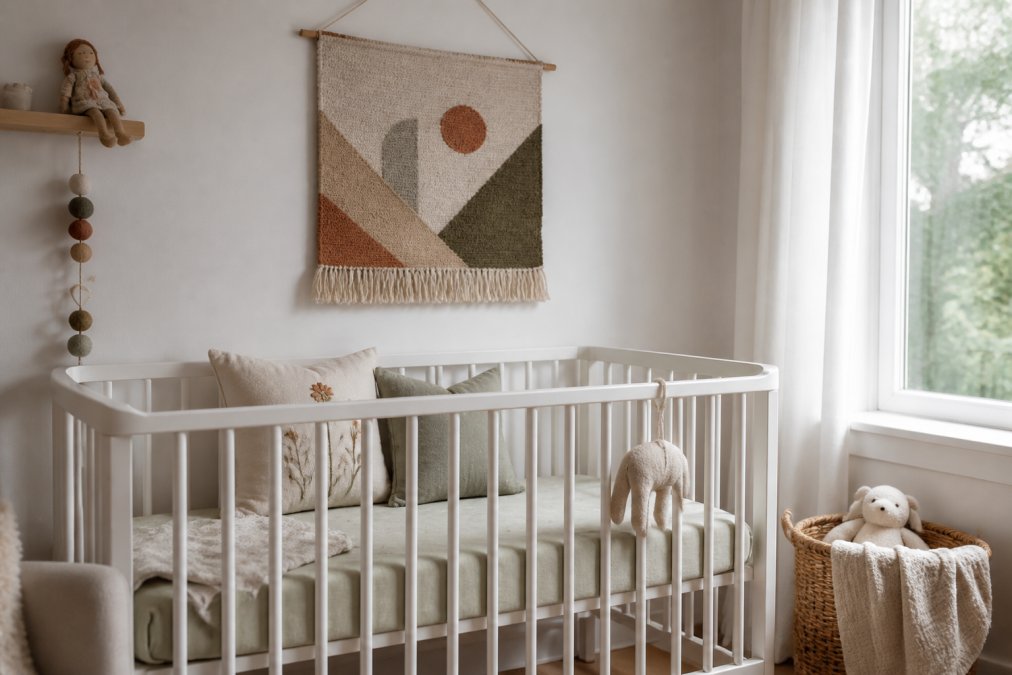
The most impactful handmade textiles for nursery decor fall into three categories: wall-mounted pieces, bedding elements, and soft furnishings. Each serves both functional and aesthetic purposes.
Fabric Wall Hangings and Textile Art
Fabric wall hangings create instant focal points while adding acoustic benefits that soften sound in a nursery. Unlike hard surfaces that reflect noise, textile wall art absorbs sound waves, creating a calmer environment for sleep and play.
Handmade fabric wall hangings range from simple stretched-fabric panels to complex tapestries featuring embroidery, appliqué, or patchwork. The most effective designs balance visual interest with visual calm, busy enough to engage developing eyes, but not so complex that they overstimulate.
Installation flexibility matters, especially for renters. Consider hanging systems that don't require permanent wall damage. Removable adhesive strips, tension rods, or clip-based systems allow you to display textile wall art without sacrificing your security deposit.
Custom Crib Bedding and Rail Covers
Custom crib bedding represents the most practical application of handmade textiles for nursery decor. A fitted sheet, flat sheet, and pillowcase in coordinating fabrics create a cohesive look while ensuring safety compliance. Crib rail covers protect both your baby and the crib itself while adding softness to the sleeping environment.
When commissioning custom crib bedding, prioritize washability. Babies create stains, spit-up, diaper leaks, and food residue accumulate quickly. Select fabrics that withstand frequent washing without fading or degrading. Preshrunk, high-quality cotton holds up far better than novelty fabrics.
Crib skirts (also called dust ruffles) add visual interest while hiding storage underneath.
Embroidered Pillows and Soft Furnishings
Embroidered pillows add texture and personality to nursery spaces. Handmade embroidery work, whether traditional stitching or contemporary designs, creates focal points on gliders, window seats, or decorative shelving. These pieces showcase craftsmanship in ways that appeal to both adults and developing infants.
How to Clean and Maintain Handmade Baby Textiles
Proper care extends the life of handmade textiles for nursery decor while maintaining safety and appearance. Different materials require different approaches.
Washing and Care Guidelines
Always check the maker's care instructions before washing. Most handmade natural fiber textiles benefit from gentle washing in cool water with mild detergent. Avoid bleach and harsh chemicals that can damage fibers and remove natural protective qualities.
Storing Textiles to Preserve Quality
When storing handmade textiles for nursery decor during off-seasons or for future children, proper storage prevents deterioration. Use acid-free tissue paper to wrap folded textiles, preventing creases from setting permanently. Avoid plastic storage containers, which trap moisture and encourage mildew growth. Instead, use breathable cotton bags or acid-free boxes.
Installation and Styling for Renters and Permanent Spaces
Renters face unique constraints when decorating with handmade textiles for nursery decor. Fortunately, most textile installations work beautifully without permanent modifications.
Sustainable and Eco-Friendly Textile Sourcing
Choosing handmade textiles for nursery decor from sustainable sources aligns your purchasing decisions with your values as a parent. Eco-conscious textile choices reduce environmental impact while supporting makers who prioritize responsible practices.
Frequently Asked Questions
What safety standards should handmade textiles for nursery decor meet?
Handmade textiles for nursery should comply with CPSC (Consumer Product Safety Commission) standards, particularly CPSIA regulations for children's products. Look for certifications like GOTS (Global Organic Textile Standard) or Oeko-Tex, which verify the absence of harmful chemicals and dyes. Ensure crib bedding meets CPSC firmness and fit requirements, and avoid loose decorative elements that pose suffocation risks. Always verify that dyes and finishes are non-toxic and appropriate for items babies may touch or mouth.
How do I clean handmade baby textiles without damaging them?
Check the care label first, as handmade pieces often require gentle handling. Most handmade baby textiles should be washed in cool water on a delicate cycle using mild, baby-safe detergent free from dyes and perfumes. Avoid bleach and fabric softeners, which can irritate sensitive skin. Air-dry whenever possible to preserve embroidery and delicate stitching. For heavily soiled items, pre-soak in cool water rather than scrubbing. Hand-washing is safest for embroidered or quilted pieces with intricate details.
Are handmade textiles worth the cost compared to mass-produced nursery decor?
Handmade textiles offer durability, unique design, and quality craftsmanship that mass-produced items often lack. Each piece is created with attention to detail and typically uses higher-quality materials like washed cotton and natural fibers. Handmade items withstand repeated washing and wear, making them suitable for multiple children or resale. The aesthetic value of custom, one-of-a-kind designs adds character to a nursery and creates a cohesive, thoughtfully designed space rather than generic decor.
What natural fabrics are safest for a baby's nursery textiles?
Organic cotton is the gold standard for baby textiles because it's naturally soft, breathable, and grown without synthetic pesticides or herbicides. Linen offers durability and temperature regulation, making it ideal for bedding and wall hangings. Bamboo viscose is hypoallergenic and gentle on sensitive skin. Wool, when certified and properly treated, provides warmth and breathability. Always verify that natural fabrics are free from chemical finishes and dyes, and choose GOTS-certified or Oeko-Tex-certified options to ensure safety and environmental responsibility.