

Are Handmade Designer Kitchenware Pieces Worth Buying Online?
Posted by Editorial Team on Nov 8th 2026
Last Updated: November 7, 2026
Quick Summary
Yes, buying handmade kitchenware online can be worthwhile if you compare sellers carefully. Start with the maker's own shop, check whether the listing names the studio and shows real photos, and confirm the care notes and return policy before you order.
- Maker-run shops usually give the clearest view of materials, process and returns.
- Stoneware is the most practical choice for everyday use because it is chip-resistant and holds heat well.
- Earthenware is porous unless fully glazed, so inspect glaze quality closely before buying.
- Check that the listing names the maker or studio and describes how each piece is made.
- Confirm the return policy, shipping time and care instructions before you place an order.
Table of Contents
- Where to Buy Handmade Designer Kitchenware Online
- Handmade Pottery Online Shop Options Compared
- Handmade Dinnerware Sets: Materials and Use Cases
- Handmade Wooden Kitchenware: What to Look For
- Designer Kitchen Accessories and Serving Pieces
- Checking Whether a Maker Is Genuinely Handmade
- Is Handmade Kitchenware Food-Safe and How to Care for It
- Choosing Your First Handmade Kitchenware Piece
- Frequently Asked Questions
Where to Buy Handmade Designer Kitchenware Online
If you want to buy handmade designer kitchenware online, you have more choices than ever. Online kitchenware is a substantial retail category in the United States, with IBISWorld's 2026 industry estimate for online kitchenware sales placing the market at $13.0 billion. That figure covers kitchenware in general, not handmade pieces alone, so treat it as context rather than a measure of the handmade segment.
At thomaspaul, we curate handmade home textiles and designer decor, including kitchenware and serving accessories. This guide is meant to help you compare where to shop and what to look for before you buy. Start with the maker's own shop, then check marketplaces and specialty retailers for the same category.
Here is how we would approach the search:
- Maker-run shops: Often give the clearest view of materials, process and returns.
- Marketplaces: Offer wide selection, but seller quality varies from one listing to the next.
- Department and design retailers: Usually offer consistent returns, though handmade stock may be limited.
Handmade Pottery Online Shop Options Compared
A handmade pottery online shop can be a strong choice when you want one-of-a-kind pieces. The trade-off is that stock is often small and production runs are limited, so favorite patterns can sell out.
When comparing shops, check these points before you order:
- Whether the listing names the maker or studio
- Clear photos of the actual piece, not only a styled set
- Stated dimensions and capacity
- A return or damage policy written out in plain language
A shop that answers these questions plainly is usually easier to trust than one that relies on vague "artisan" wording.
Handmade Dinnerware Sets: Materials and Use Cases
Handmade dinnerware sets are commonly made from stoneware, porcelain or earthenware, and the material you choose affects how the set performs at the table, in the oven and in the dishwasher. Use this comparison to match a set to how you actually cook and eat.
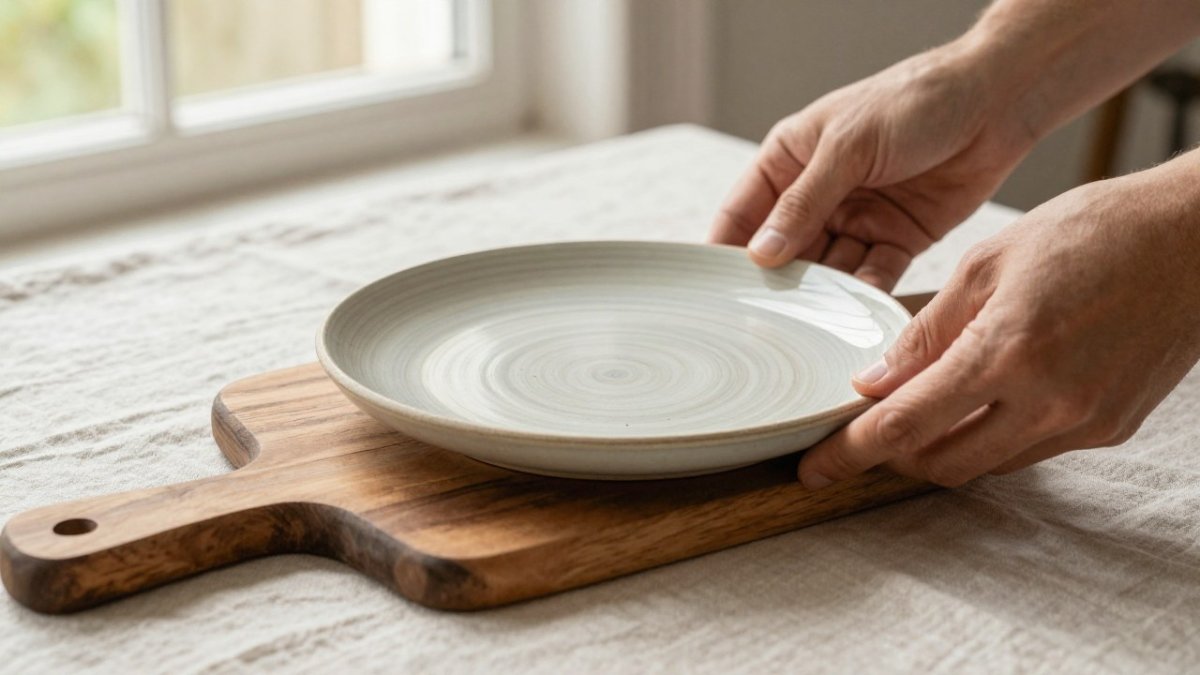
Stoneware is dense, fired at high temperature and usually chip-resistant, which makes it the most forgiving choice for daily meals. It holds heat well, so plates stay warm through a second helping. The trade-off is weight: stoneware is heavier than porcelain, and thick pieces can be awkward for anyone with limited hand strength. Most stoneware is dishwasher-safe and microwave-safe, but confirm the seller's care notes, because reactive glazes and metallic accents can change that.
Porcelain is fired hotter and is thinner and more refined, which suits formal settings and smaller storage spaces. Quality porcelain is surprisingly durable, but it chips more readily than stoneware when knocked against a sink or stacked carelessly. Many porcelain pieces are oven-safe to moderate temperatures and microwave-safe, but hand-painting and gold or platinum rims often make a piece hand-wash only.
Earthenware is fired at lower temperatures and is porous unless fully glazed. A food-safe glaze seals the body, but unglazed or crazed (finely cracked) glaze can let moisture in, which is why earthenware needs more careful inspection before purchase. Earthenware is often the most affordable handmade option and takes color beautifully, but it is more prone to thermal shock, so avoid moving a cold dish straight into a hot oven.
For everyday use, a stoneware set is usually the practical pick. For occasional entertaining, porcelain or fine glazed pieces may suit you better. If you are building a set over time, buy from the same studio where possible so glaze lots and dimensions match. Serious Eats' dinnerware-set roundup is a useful place to compare set styles side by side, though it does not confirm which sets are handmade.
Watch out: a set described as "dishwasher-safe" may still have hand-painted details or metallic rims that degrade in a dishwasher, so check the care line for each piece rather than the set as a whole.
The three common handmade dinnerware materials differ in weight, heat behaviour and durability, as summarised below.
| Material | Key trait | Watch for |
|---|---|---|
| Stoneware | Dense, chip-resistant, holds heat | Heavier; check care notes for reactive glazes |
| Porcelain | Thinner, refined, suits formal use | Chips more easily when knocked; hand-wash on gold or platinum rims |
| Earthenware | Often most affordable, takes colour well | Porous unless fully glazed; prone to thermal shock |
Handmade Wooden Kitchenware: What to Look For
Wooden cutting boards, bowls and utensils are popular handmade choices. Look for hardwoods such as maple, walnut or cherry, and check that the finish is food-safe. Avoid pieces with unfinished edges or glued seams that show gaps.
Wood needs regular care. Hand-wash it, dry it promptly, and oil it periodically. We recommend asking the seller about the finish before you buy, since it determines how the piece should be cleaned.
Designer Kitchen Accessories and Serving Pieces
Pricing depends on quantity, dates, and delivery, so check the seller's website for current prices and shipping costs before you decide between a set and individual items.
Checking Whether a Maker Is Genuinely Handmade
"Handmade" is not a regulated term, so a label alone does not prove a piece was made by hand. Lynne's Creations' 2026 buying guide makes this point and recommends looking for specific evidence instead. The stronger approach is to check the production method, the provenance and the consistency of the listing, because those are harder to fake than a single word.
Production method. A maker worth buying from usually describes how a piece is made. Ask whether the piece is made one at a time or in small batches, and whether the seller can explain what varies from piece to piece.
Provenance. Look for the maker's name, studio location and a short background on how they trained or how long they have worked in the craft. A listing that names the studio and shows the workshop is more verifiable than one that uses only stock photography. If the seller sources clay, wood or linen from a specific supplier or region, that detail is a useful signal of transparency.
Material sourcing. Ask sellers about the materials they use, such as the species of wood, the clay body and glaze supplier, and the fiber content of textiles. Sellers who can answer these questions quickly are usually closer to the production process.
Batch consistency and lead time. Ask whether the piece you see is in stock or made to order, and whether a repeat order will match the sample.
Ask these questions before you buy:
- Does the listing name the maker, studio or artisan?
- Are production methods described, such as wheel-thrown, hand-carved or hand-glazed?
- Are photos of the workshop or the process available?
- Does the seller explain how the piece is made and finished?
- Can the seller describe the clay, wood or fiber and where it comes from?
A maker who answers these questions in detail is usually a safer bet than one who relies on the word alone. Watch out: a marketplace listing can carry the word "handmade" while the seller is a reseller, so check whether the same maker appears across multiple listings and whether the studio details are consistent.
Is Handmade Kitchenware Food-Safe and How to Care for It
Food safety depends on the glaze, finish and material, not on whether a piece is handmade. Look for glazes labeled food-safe and confirm that the seller states this clearly.
Care needs vary. Hand-wash most handmade pieces, avoid harsh abrasives, and dry them fully. Wooden pieces should not soak, and should be oiled occasionally. Follow the seller's care instructions, since they reflect the specific finish used.
Choosing Your First Handmade Kitchenware Piece
Start with one piece you will use every week. Choose a material that suits your habits.
Before you order, confirm the return policy, check the shipping time and read the care instructions. Those three steps prevent most disappointments with handmade purchases.
Browse the thomaspaul collection to find kitchenware and serving accessories that fit your space. Visit our website for current prices and product details before you buy.
Frequently Asked Questions
Where can I buy handmade designer kitchenware online?
Handmade designer kitchenware is sold through brand websites, independent maker shops, curated home retailers and larger marketplaces. Compare each seller's product pages for materials, dimensions and maker information, since the word handmade is not a regulated term. Brand sites such as thomaspaul's own shop let you browse curated kitchenware alongside textiles and decor. Check current prices directly on each seller's site, because pricing depends on the piece, quantity and shipping options.
How can I tell whether handmade pottery is food-safe?
Ask the seller whether the glaze is labeled food-safe and whether it is lead- and cadmium-free. Look for glazes fired to full maturity and avoid decorative pieces with unglazed interiors if you plan to serve food or drinks. Pieces meant only for display are not always tested for food contact, so confirm the intended use before ordering. Reputable makers usually state their glaze specifications on the product page.
What should I look for when buying handmade dinnerware sets online?
Check the material first and confirm whether the set is dishwasher and microwave safe. Compare the piece dimensions and check the seller's listing for open-stock options so you can replace single items. Review the return policy for breakage, because handmade ceramics are more fragile in transit.
What is the difference between handmade and mass-produced kitchenware?
Handmade kitchenware is shaped, trimmed or finished by hand, so small variations in weight, glaze and form are normal and often part of the appeal. Mass-produced pieces are made in molds or by machine, which typically makes them more uniform and usually less expensive. Neither approach guarantees quality on its own, so evaluate materials, finishing and the maker's care standards rather than assuming handmade means better.
