

How to Mix Vintage Decor in a Modern Home
Oct 5th 2026
Table of Contents
- Start with a Neutral Base to Ground Your Space
- How to Mix Vintage and Modern Furniture Without Clashing
- Vintage Modern Home Decor Ideas: Finding Your Common Thread
- How to Style Antiques in a Modern Home: Room-by-Room
- Coordinate Colors and Complementary Shades
- Combine Finishes and Materials for Balance
- Sourcing, Authentication, and Condition Assessment
- Common Mistakes to Avoid When Mixing Vintage and Modern
- Frequently Asked Questions
Last Updated: October 5, 2026
Start with a Neutral Base to Ground Your Space
A neutral foundation is your most powerful tool when learning how to mix vintage decor in a modern home. Think of it as a blank canvas that lets both old and new pieces shine without competing for attention.
Start by choosing soft whites, warm greys, or subtle beiges for your walls and larger furniture pieces. These colors create visual calm and make it easier to layer in vintage finds later. A soft white or light grey sofa, for example, becomes the perfect backdrop for a vintage patterned throw pillow or an antique wooden side table.
Your neutral base doesn't mean boring. Texture matters just as much as color. Consider a linen sofa with a subtle weave, or walls with a soft matte finish rather than high-gloss paint. These details add depth while keeping the space grounded.
How to Mix Vintage and Modern Furniture Without Clashing
The real secret to mixing vintage and modern furniture is understanding that contrast creates interest, not chaos. Pairing a sleek contemporary sofa with a distressed wooden coffee table works because the styles balance each other visually.
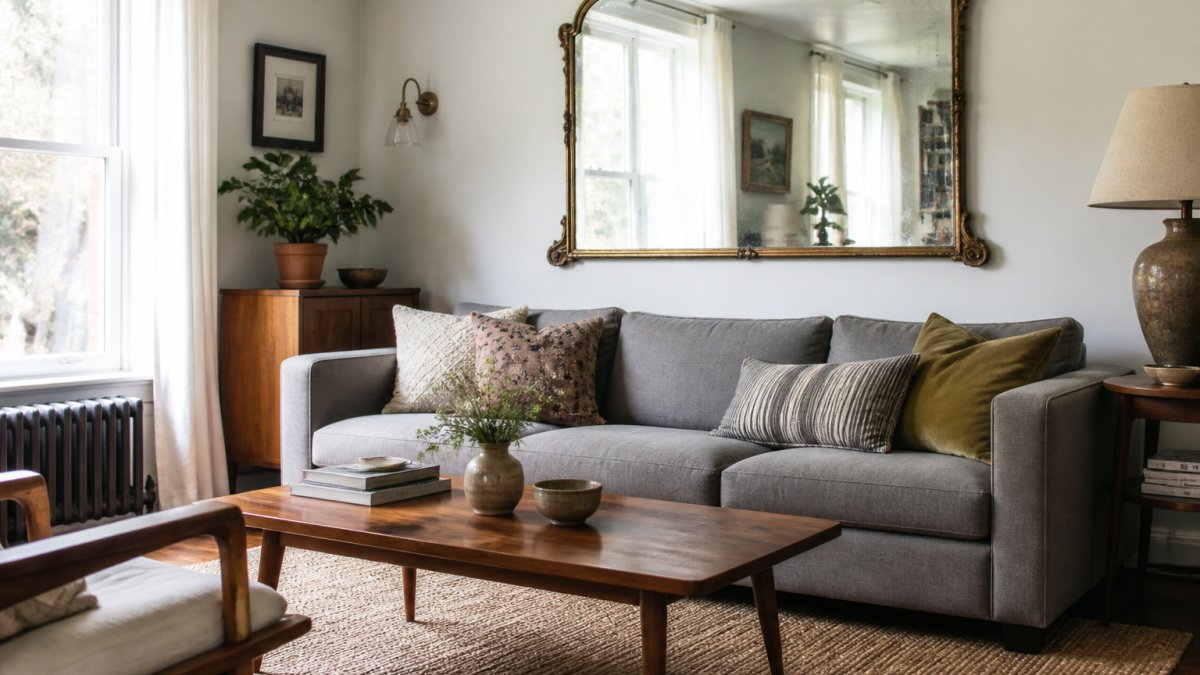
Think about mixing furniture styles this way: pair clean-lined modern pieces with pieces that have more ornate or aged details. A glass and steel shelving unit looks intentional next to a Victorian-era writing desk.
The key is proportion. Don't fill your room with all vintage or all modern. A good ratio is about 60% neutral modern pieces and 40% vintage accents. This keeps the space feeling contemporary while letting vintage elements stand out as intentional choices rather than clutter.
Vintage Modern Home Decor Ideas: Finding Your Common Thread
The best vintage modern home decor comes together when pieces share a unifying element. This common thread ties everything together visually, even if the pieces come from completely different eras.
Common threads might be:
- Material: All wood pieces, or pieces with metal accents
- Color family: Warm tones (golds, warm greys, creams) or cool tones (silvers, cool greys, whites)
- Style era: Mid-century modern mixed with 1950s glassware, or French antique paired with contemporary minimalism
- Finish type: Distressed and aged textures grouped with matte modern finishes
Once you pick your thread, it becomes your filter. When you're browsing for a vintage side table or antique frame, you ask: does this fit my chosen thread? If the answer is yes, it likely belongs in your space.
Use Contrast to Create Visual Interest
Contrast is what prevents a vintage modern space from feeling flat or one-note. Without it, your room reads as safe but forgettable.
Create contrast by pairing:
- Ornate vintage pieces with clean-lined modern furniture
- Aged, distressed finishes with sleek, polished surfaces
- Bold vintage patterns with solid modern walls
- Dark wood antiques with light modern textiles
The contrast doesn't have to be dramatic. A slightly ornate vintage frame on a stark modern wall is enough to catch the eye and add sophistication.
Choose a Statement Piece as Your Focal Point
Every room needs a focal point, and a vintage piece often makes the best one. A statement piece draws the eye and gives your space character.
Good statement pieces include:
- An antique mirror with ornate framing
- A vintage credenza or writing desk
- A large piece of vintage art or a collection of framed photographs
- A distressed wooden bookcase or shelving unit
- A decorative vintage rug in a bold pattern
Once you choose your statement piece, arrange the rest of the room around it. Keep nearby furniture simpler and more neutral so the statement piece stays the visual anchor.
How to Style Antiques in a Modern Home: Room-by-Room
Different rooms have different needs. Here's how to approach vintage and antique styling in the spaces where you actually live.
Living Rooms
Living rooms are ideal for mixing vintage and modern because they're naturally focal-point spaces. Anchor the room with either a modern sofa and vintage accent pieces, or a vintage sofa paired with contemporary side tables and lighting.
Vintage pieces that work well in living rooms:
- Coffee tables in wood or metal
- Bookshelves or credenzas
- Mirrors with ornate frames
- Vintage lamps or light fixtures
- Art and framed photographs
- Vintage rugs (layered over modern ones for texture)
Keep the sofa modern and comfortable. Vintage seating often doesn't meet modern comfort standards, so save antique chairs for occasional use or pair them with cushions and throws.
Bedrooms
Bedrooms benefit from a softer, more curated approach. Too many vintage pieces can make a bedroom feel cluttered or dated rather than charming.
Focus on:
- A vintage wooden bed frame or headboard
- Antique nightstands or a dresser
- Vintage mirrors above the dresser
- Framed vintage prints or photography
- A vintage rug at the foot of the bed
- Antique or vintage-inspired lighting
Keep bedding, curtains, and wall color modern and neutral. Let the furniture carry the vintage character. This prevents the room from feeling like a museum.
Kitchens and Dining Spaces
Kitchens and dining areas are where vintage decor becomes functional and fun. Vintage kitchenware, glassware, and serving pieces add character without taking up much space.
Vintage-friendly kitchen and dining elements:
- Open shelving displaying vintage dishes or glassware
- A vintage dining table paired with modern chairs
- Vintage serving utensils, platters, or kitchen tools displayed on walls
- Antique lighting fixtures over the dining table
- Vintage cookbooks on open shelves
- A vintage rug under the dining table
The key here is mixing everyday function with visual interest. A vintage serving platter you actually use is better than a purely decorative piece.
Small Spaces and Rentals
Small spaces and rentals require a different strategy. You can't afford visual clutter, and you may not be able to paint or make permanent changes.
For small spaces and rentals, choose:
- One statement vintage piece (a mirror, small dresser, or side table)
- Vintage textiles like pillows, throws, or a rug
- Framed vintage art or photographs
- Vintage lighting that plugs in (no rewiring needed)
- Vintage accessories grouped on shelves or tables
This approach gives you vintage character without overwhelming the space or requiring landlord permission. When you move, you take everything with you.
Coordinate Colors and Complementary Shades
Color coordination is what makes a mixed vintage and modern space feel intentional rather than random. Your neutral base does the heavy lifting, but complementary shades tie everything together.
Once you've chosen your neutral palette, pick one or two complementary shades to repeat throughout the room. If your base is soft white and warm grey, your complementary shade might be a muted sage green or warm taupe. This shade appears in your vintage rug, a throw pillow, a piece of vintage art, and maybe a painted vintage accent piece.
Repeat your complementary shade at least three times in the room so it feels intentional. This creates visual harmony and makes the space feel designed rather than assembled.
Combine Finishes and Materials for Balance
Finishes are the texture and sheen of surfaces. Mixing finishes prevents your space from feeling one-dimensional.
Common finishes in vintage and modern decor:
- Wood: Polished, distressed, aged, natural
- Metal: Polished, brushed, antiqued, matte
- Glass: Clear, frosted, vintage patina
- Textiles: Smooth, woven, distressed, patterned
A good mix includes at least three different finishes. For example: a polished metal lamp, a distressed wooden table, and a smooth glass vase. This variety keeps the eye moving and adds sophistication.
Avoid using the same finish too much. A room full of polished finishes feels cold and formal. A room full of distressed finishes feels cluttered and chaotic. Balance is key.
Sourcing, Authentication, and Condition Assessment
Finding the right vintage pieces is half the challenge. Knowing where to look and what to check for matters.
Where to source vintage pieces:
- Antique shops and malls (good for authentic pieces, higher prices)
- Estate sales and auctions (best selection, requires research)
- Online marketplaces (convenient, harder to assess condition)
- Thrift stores (budget-friendly, hit-or-miss quality)
- Local vintage dealers (curated selection, personal service)
What to check before buying:
Look for structural integrity. Sit in vintage chairs to test stability. Open drawers and doors to ensure they move smoothly. Check wooden pieces for water damage, deep scratches, or loose joints.
Examine finishes honestly. Distressed finishes are intentional, but severe damage is not the same as vintage character. A piece with minor wear that shows its age is different from one that's falling apart.
For vintage textiles like rugs or upholstered pieces, check for stains, odors, or pest damage. These are expensive to fix and often not worth the cost.
Ask sellers questions about provenance and history when possible. A piece with a known history is more valuable and interesting than one with an unknown background.
Common Mistakes to Avoid When Mixing Vintage and Modern
Learning what not to do saves time, money, and decorating frustration.
Mistake 2: Ignoring scale and proportion. A massive ornate Victorian cabinet overwhelms a small apartment.
Mistake 3: Mismatched finishes everywhere. While mixing finishes is good, having five different metal finishes in one room is chaotic.
Mistake 4: Forgetting about function. A beautiful vintage chair that's uncomfortable to sit in is just decoration.
Mistake 5: Skipping the neutral base. Trying to mix vintage and modern without a neutral foundation creates visual chaos.
Mistake 6: Buying pieces that don't fit your color story. A beautiful vintage item in the wrong color family disrupts your space.
At thomaspaul, we understand that mixing vintage decor with modern design is about creating a space that reflects your personal style.
The beauty of mixing vintage and modern is that it's personal.
Mixing vintage decor with modern design transforms a house into a home with character and intention.
Frequently Asked Questions
What is the 3-5-7 rule in decorating?
The 3-5-7 rule is a proportion framework for styling: display items in groups of 3, 5, or 7 rather than even numbers. This creates visual rhythm and prevents a space from feeling too symmetrical or sterile. When mixing vintage decor in a modern home, use this rule to arrange accessories on shelves, group vintage frames on a wall, or layer decorative accents on a coffee table. Odd numbers feel more curated and sophisticated than pairs or sets of four.
How many vintage pieces should you use in a modern room?
Aim for 20-40% vintage pieces in a predominantly modern space to maintain balance without overwhelming the room. A single statement piece, like a mid-century writing desk or ornate French antique mirror, can anchor an entire room. Supplement it with smaller vintage accents: glassware, photo frames, textiles, or decorative objects. This ratio prevents the space from feeling like a thrift store while honoring the vintage aesthetic.
How do you keep vintage and modern decor from clashing?
Build your foundation with a neutral palette of soft white, grey, or beige, then layer vintage and modern pieces through complementary shades and finishes. Choose one common thread, such as a material (wood, glass, metal) or era (mid-century, 1950s), to unite disparate pieces. Use contrast intentionally: pair clean-lined modern furniture with ornate vintage accents, or balance distressed, aged textures with sleek contemporary elements. This deliberate mixing feels sophisticated rather than accidental.
Is it okay to mix rustic with modern?
Yes, rustic and modern can blend beautifully when grounded in a cohesive color scheme and material palette. Rustic elements like distressed wood, aged textures, and weathered finishes pair well with modern clean lines if you keep the overall aesthetic balanced. Use warm metallic finishes (copper, brass) or soft neutrals to bridge the two styles. A rustic barn-wood shelf against white walls with contemporary decor, for example, creates warmth without clashing.